





Details
Description
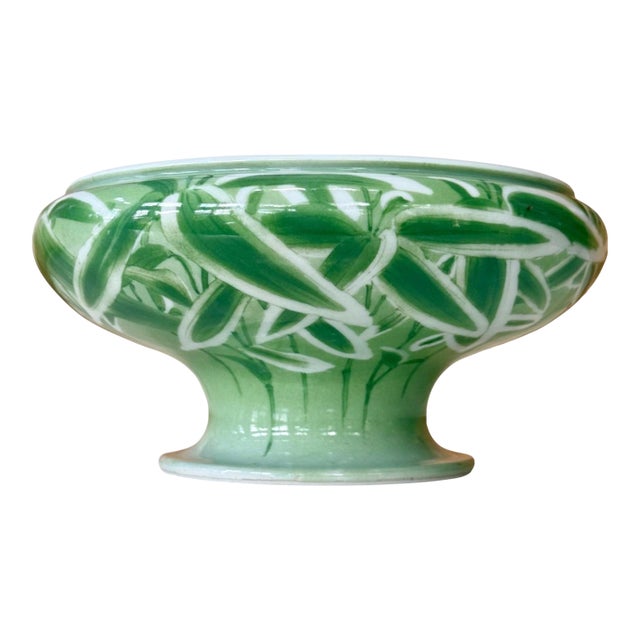
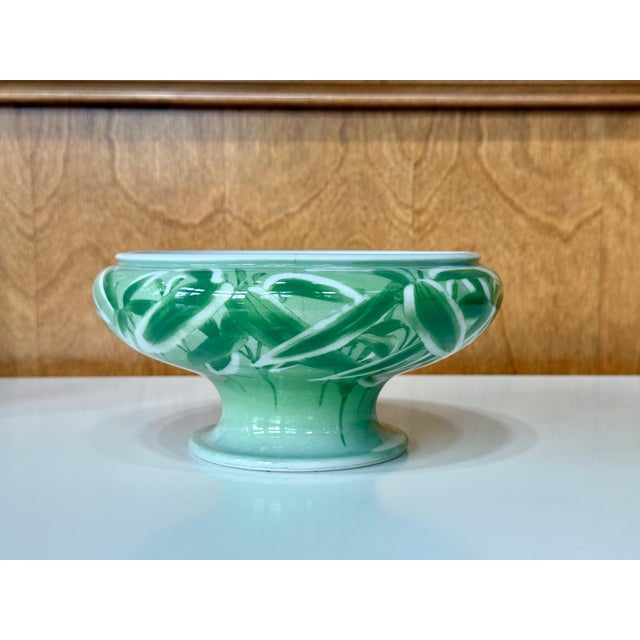
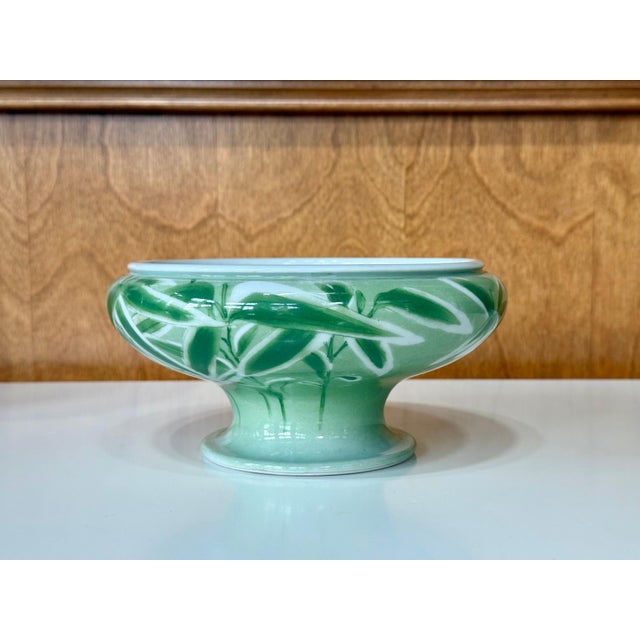
A Japanese porcelain stem bowl with beautifully decorated glazed surface by Makuzu Kozan, also known as Miyagawa Kozan (1842–1916), one …
Read more
A Japanese porcelain stem bowl with beautifully decorated glazed surface by Makuzu Kozan, also known as Miyagawa Kozan (1842–1916), one of the most established and collected ceramists from Meiji Period. The exterior of the bowl is covered in a bright green glaze with bamboo leaves motif covered in a dust of snow. This is one of the popular designs from the underglaze period by Kozan. It is a wonderful way to showcase new color palettes and the gradient technique called Morotai (Hazy style). The shape of this stem bowl is unusual and scarce in the existing Makuzu Lpzan's pieces. It was inspired by the dishes used for offering on the temple altars. The bowl is signed on the base in blue underglaze mark "Made by Mazuku Kozan"
Makuzu Kozan, also known as Miyagawa Kozan (1842–1916), one of the most established and collected ceramists from Meiji Period. Born as Miyagawa Toranosuke, Kozan established his pottery studio in Yokohama circa 1870s and later became one of the appointed artists to the Japanese Imperial household. His work was exhibited in many international fairs that the Meiji government participated at the turn of the century and won many grand prizes. Known as one of the most creative ceramists, circa 1887, Kozan started experimenting with new chemical colors from the West in the format of his porcelain glaze. New colors allowed him to create underglaze design that appeared bright, smooth and glossy. To create design that is realistic and dimensional, more common in the western paintings, he was inspired by the native Japanese ink painting technique developed around 1900 by Yokoyama Taikan (1868-1958) and Hishidan Shunso (1874-1911) called Morotai (Hazy style) and used colors on the porcelain like ink on paper. The fuki-e technique was demanding and uniquely featured in the works of Kozan studio.
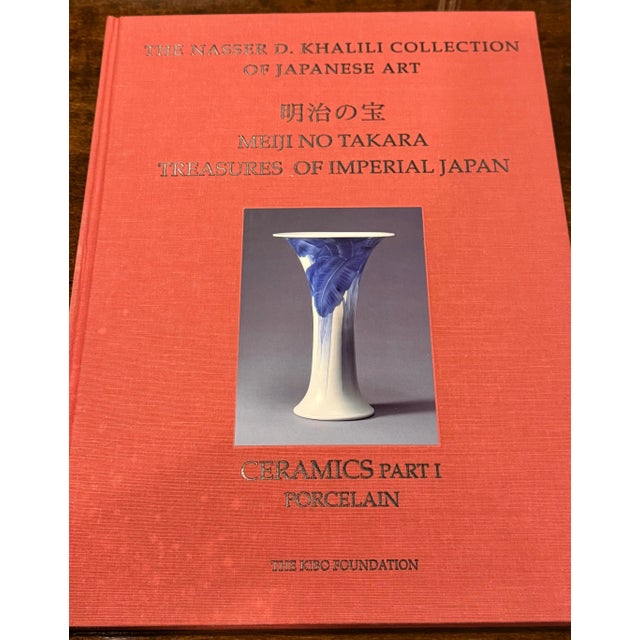
Two pieces in Nasser D. Khalili Collection are of comparable interest (see last three pictures). Page 51 illustrated a jar with nearly identical design motifs in blue. Page 69 illustrates a bowl of a comparable form.
See less
- Dimensions
- 8.25ʺW × 8.25ʺD × 4ʺH
- Styles
- Mid-Century Modern
- Period
- 1900 - 1909
- Country of Origin
- Japan
- Item Type
- Vintage, Antique or Pre-owned
- Materials
- Ceramic
- Condition
- Good Condition, Original Condition Unaltered, Some Imperfections
- Color
- Green
- Condition Notes
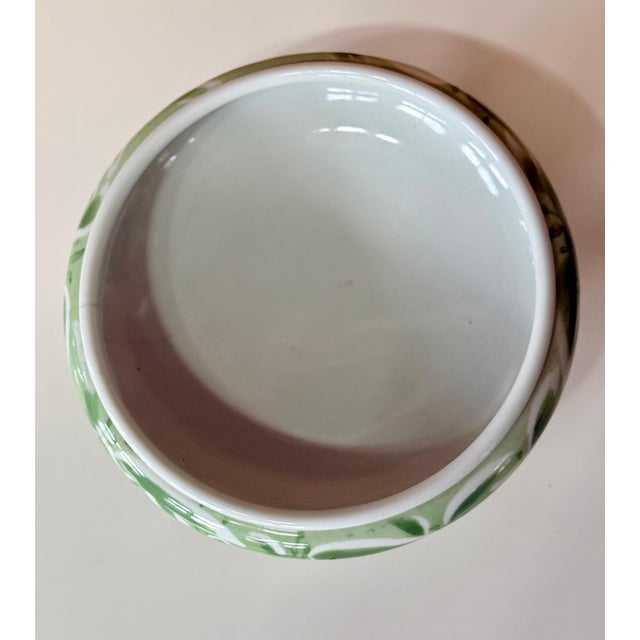
- GoodWear consistent with age and use. Overall good; There is one glaze crack line running down the rim as shown … moreGoodWear consistent with age and use. Overall good; There is one glaze crack line running down the rim as shown in detail pictures. A minute flea bite on the base rim. less
Questions about the item?
Returns & Cancellations
Return Policy - All sales are final 48 hours after delivery, unless otherwise specified in the description of the product.
Cancellation Policy - Prior to shipping or local pickup, buyers may cancel an order for up to 48 hours, unless otherwise specified.
Related Collections
- Feather Decorative Bowls
- Tyra Lundgren Decorative Bowls
- Carlo Moretti Decorative Bowls
- Port 68 Decorative Bowls
- Gucci Decorative Bowls
- Classical Greek Decorative Bowls
- Hermès Decorative Bowls
- Nymphenburg Porcelain Decorative Bowls
- Sèvres Porcelain Decorative Bowls
- Furstenberg Porcelain Decorative Bowls
- Arzbeg Porcelain Decorative Bowls
- Derby Porcelain Decorative Bowls
- Tiffany and Co. Decorative Bowls
- Brass Chinese Decorative Bowls
- Lalique Decorative Bowls
- Fenton Art Glass Company Decorative Bowls
- Brass Decorative Bowls
- Chinoiserie Decorative Bowls
- Chinese Decorative Bowls
- Maitland - Smith Decorative Bowls
- Japanese Decorative Bowls
- Murano Glass Decorative Bowls
- Mid-Century Modern Decorative Bowls
- Red Bowls
- Copper Decorative Bowls