


Details
Description
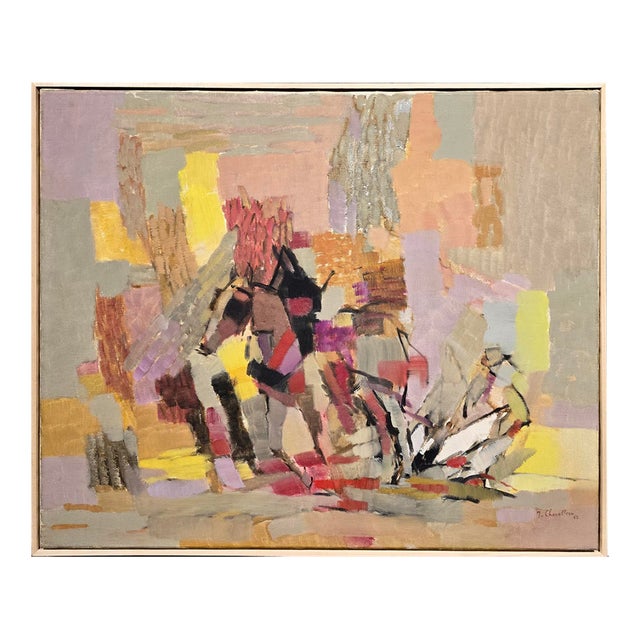
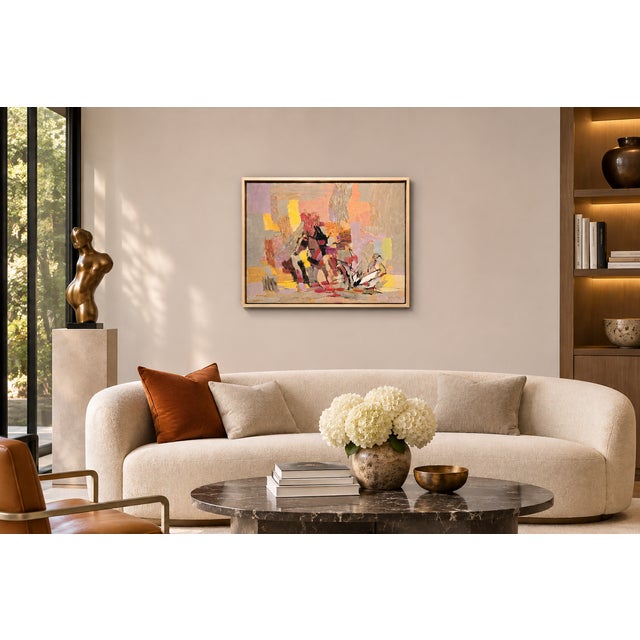
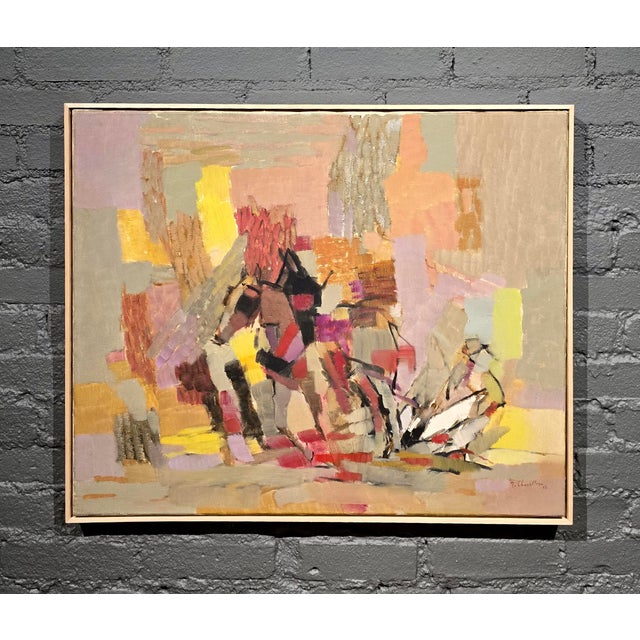
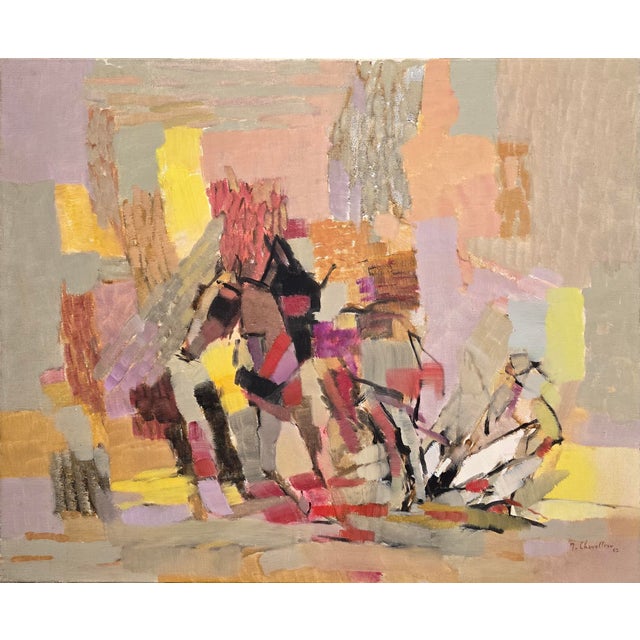
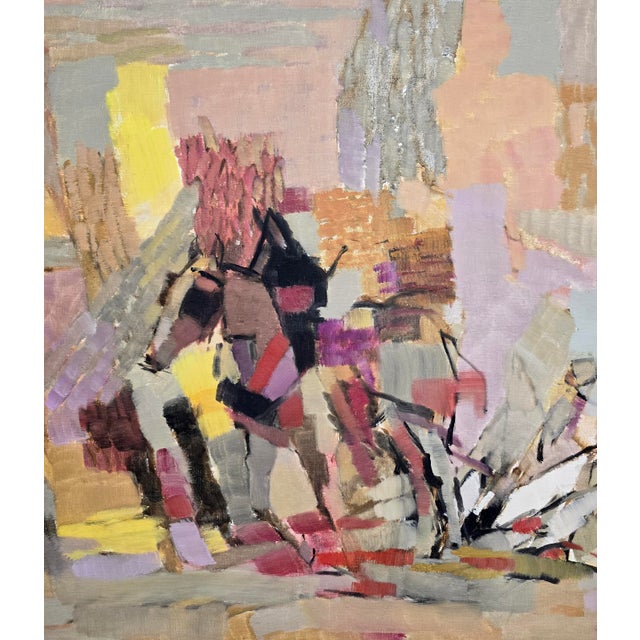
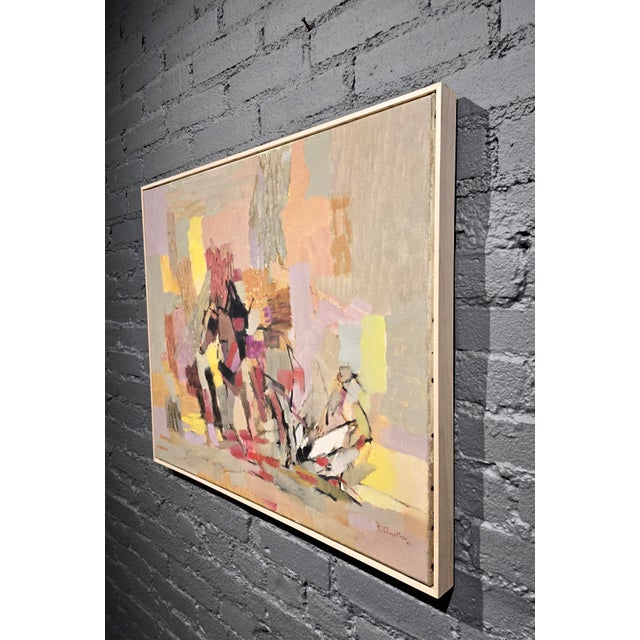
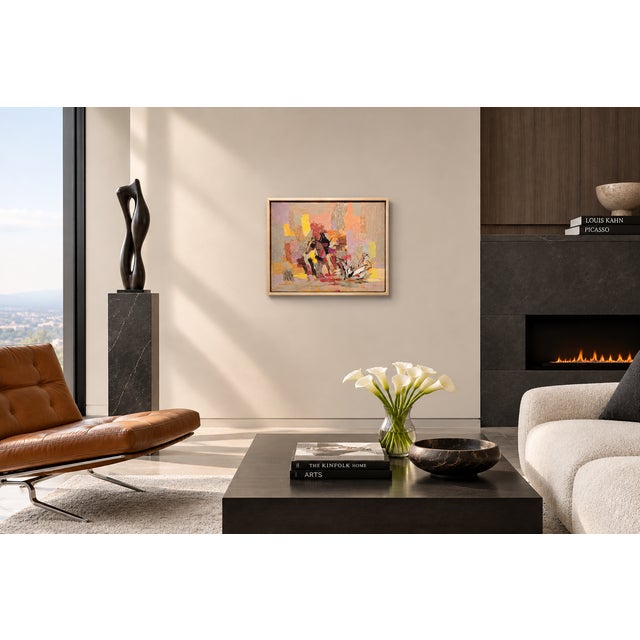
Jean Chevolleau – Equestrian & Figurative Cubist Composition – 1962 Oil Painting
French Expressionist /Cubist - Oil painting on Canvas …
Read more
Jean Chevolleau – Equestrian & Figurative Cubist Composition – 1962 Oil Painting
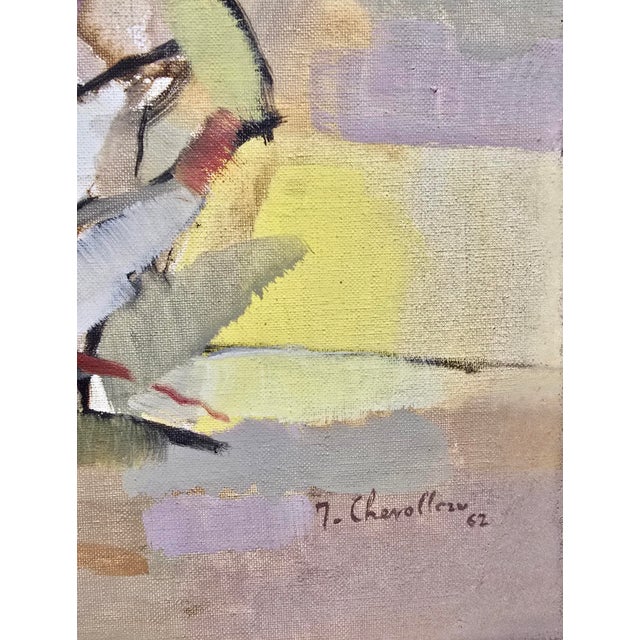
French Expressionist /Cubist - Oil painting on Canvas -Signed and dated lower right: J. Chevolleau / 62
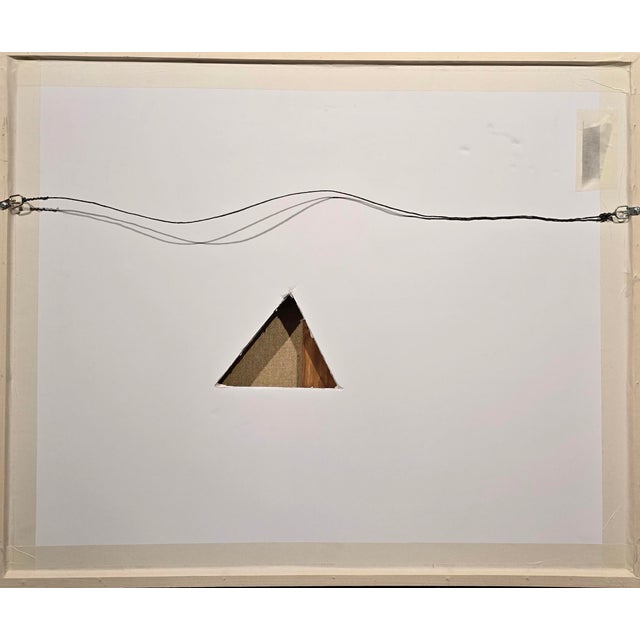
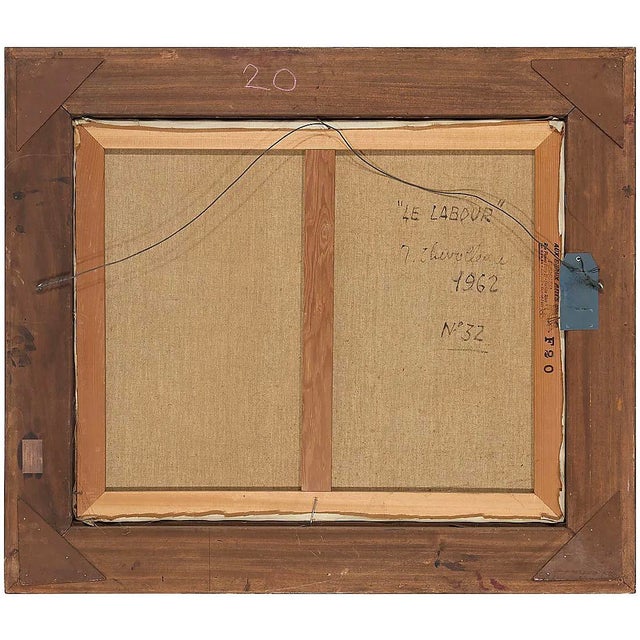
titled, and inscribed "No. 32" in paint on the canvas verso Canvas size :24 x 29" - Frame size: 25x30x2"
Verso: Titled "Le Labour" (The Plowing), signed J. Chevolleau, dated 1962, and inscribed N° 32 on the reverse of the canvas.
Description
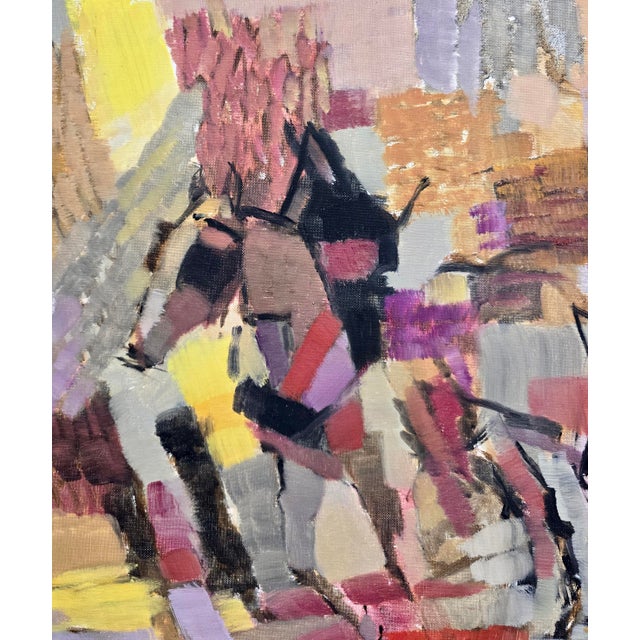
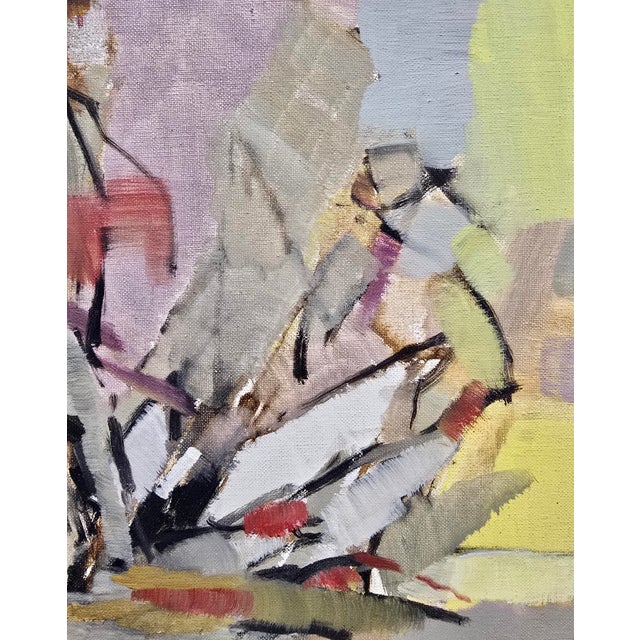
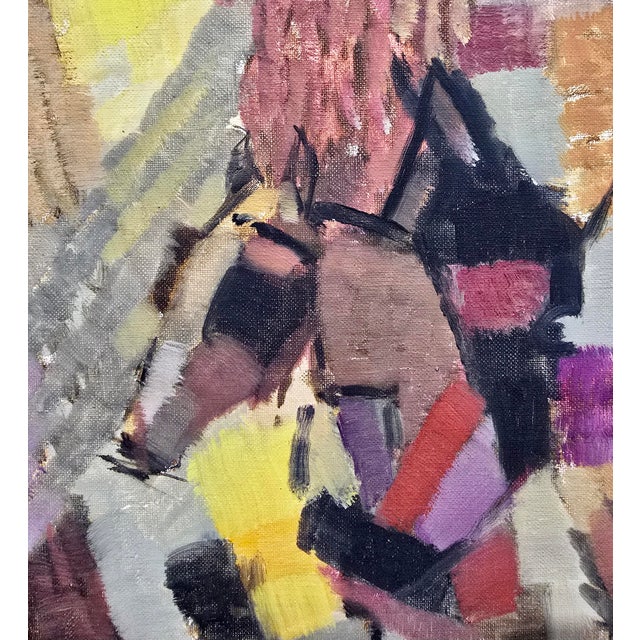
This captivating 1962 oil painting by French modernist Jean Chevolleau (1924–1996) is a remarkable example of the artist's expressive postwar aesthetic, combining the structural language of Cubism with the vibrant color and emotional intensity associated with French Expressionism.The composition centers upon a dynamic interplay of equestrian and figurative forms, inspired by the traditional rural subject of plowing. Rather than depicting the scene through conventional representation, Chevolleau transforms the subject into an atmospheric tapestry of fragmented geometric planes, rhythmic brushwork, and luminous passages of color.The canvas is distinguished by an extraordinarily refined and harmonious palette. Expanses of soft lavender, dusty rose, pale peach, and earthy ochre are punctuated by brilliant accents of crimson, golden yellow, violet, and ivory. These contrasting colors create a remarkable sense of movement and visual energy while maintaining an underlying balance and harmony.Chevolleau employs expressive, block-like vertical and horizontal brushstrokes, interspersed with gestural black lines and richly textured passages of pigment. The boundaries between the figures, horses, and surrounding landscape gradually dissolve into a sophisticated arrangement of overlapping forms, allowing the viewer to discover the underlying subject through the interplay of color, light, and movement.The artist's treatment of space reflects the continuing influence of Cubism, while his spontaneous brushwork and vibrant chromatic relationships reveal a distinctly personal and lyrical interpretation of modern abstraction.Particularly noteworthy is the artist's handwritten inscription on the reverse of the canvas, identifying the painting as "Le Labour" (The Plowing), together with his signature, the date 1962, and the number N° 32. This original inscription provides valuable documentation of the work's title and date, while the numbered designation may represent an artist's studio or inventory reference.Painted during the flourishing period of postwar French modernism, this composition beautifully illustrates Chevolleau's ability to reinterpret traditional figurative subjects through the expressive freedom of modern painting.Its sophisticated palette, energetic composition, and distinctive modernist character make it an especially appealing work for collectors of mid-century European art and French postwar abstraction.
Artist Biography
Jean Chevolleau (French, 1924–1996) was a prominent figure of the post-World War II École de Paris (School of Paris), celebrated for his ability to bridge the gap between classical composition, structural Cubism, and the lyrical emotion of intense color. Born in La Roche-sur-Yon, France, Chevolleau's early passion for the arts led him to Paris, where he studied under the highly influential Cubist master Jacques Villon, brother of Marcel Duchamp. Villon's teachings deeply informed Chevolleau's understanding of light, geometry, and the rhythmic organization of space.Chevolleau quickly integrated into the vibrant avant-garde circles of Montparnasse and became an active participant in the historic Groupe de Puteaux. Throughout the 1950s and 1960s, his work received immense critical acclaim, resulting in regular invitations to exhibit at Paris's most prestigious annual salons, including the Salon d'Automne, the Salon des Indépendants, and the Salon de Mai.While Chevolleau painted diverse subjects—ranging from sweeping French coastal landscapes to vibrant still lifes—he garnered the greatest international renown for his equestrian scenes. The horse represented the ultimate vehicle for his stylistic goals: a marriage of explosive power and elegant grace that allowed him to experiment with fracturing form to capture pure motion. Today, Chevolleau’s paintings are held in prominent private collections worldwide and are represented in public museum collections across Europe, remembered as a vital and beautifully expressive voice in the evolution of mid-century European abstraction.
See less
- Dimensions
- 30ʺW × 2ʺD × 25ʺH
- Art Subjects
- Animals
- Frame Type
- Framed
- Period
- 1960s
- Country of Origin
- France
- Item Type
- Vintage, Antique or Pre-owned
- Materials
- Canvas
- Oil Paint
- Condition
- Good Condition, Original Condition Unaltered, Some Imperfections
- Color
- Beige
- Condition Notes
- Excellent - Minor wear consistent with age and history Excellent - Minor wear consistent with age and history less
Questions about the item?
Returns & Cancellations
Return Policy - All sales are final 48 hours after delivery, unless otherwise specified in the description of the product.
Cancellation Policy - Prior to shipping or local pickup, buyers may cancel an order for up to 48 hours, unless otherwise specified.
Related Collections
- Photorealism Canvas Paintings
- Photorealism Paintings in New York
- Ed Ruscha Paintings
- Richard Serra Paintings
- Louise Nevelson Paintings
- Karen Offutt Paintings
- BDDW Paintings
- Joseph Stella Paintings
- Herman Miller Paintings
- Johannes Andersen Paintings
- Pedro Friedeberg Paintings
- Nicola Simbari Paintings
- Jeff Slemmons Paintings
- Peter Behrens Paintings
- Piet Hein Eek Paintings
- Carl-Axel Acking Paintings
- Karl-Erik Ekselius Paintings
- Hans Andersen Paintings
- Jean-Paul Barray Paintings
- Eames Paintings
- Stellar Union Paintings
- Stellar Works Paintings
- Black Photorealism Paintings
- Claude Lalanne Paintings
- George Condo Paintings