

Details
Description
Paolo De Matteis (Piano del Cilento, 1662 - Naples, 1728) attributed to/workshop
Triumph of the Trinity with the Madonna, Saint …
Read more
Paolo De Matteis (Piano del Cilento, 1662 - Naples, 1728) attributed to/workshop
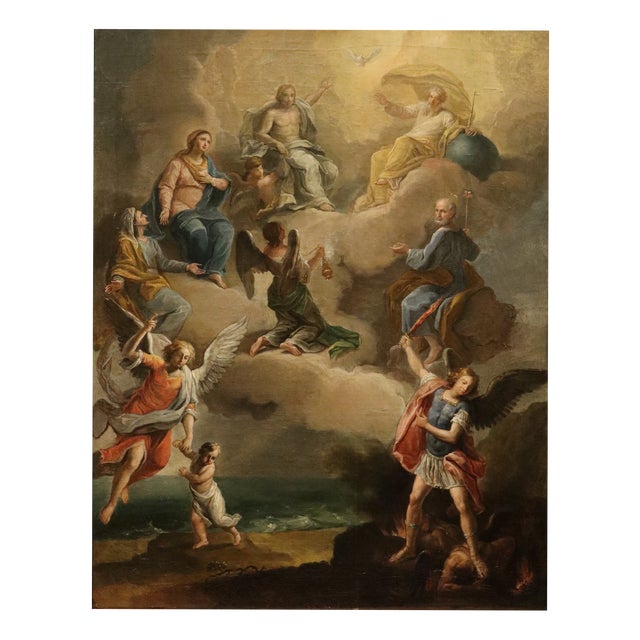
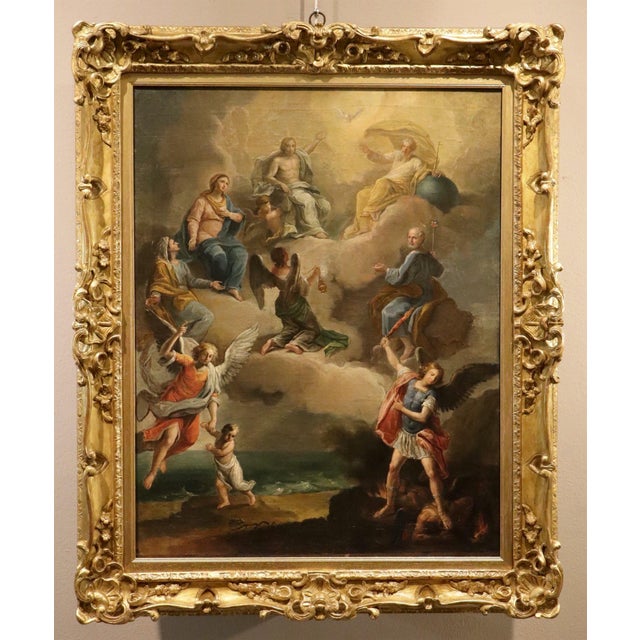
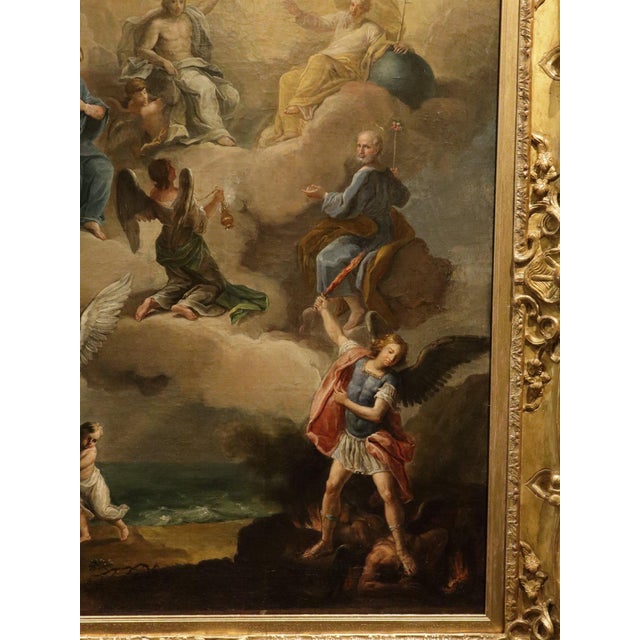
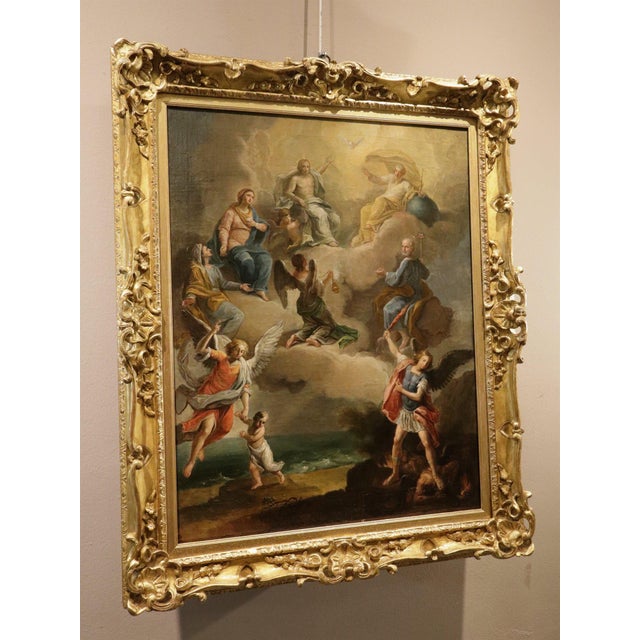
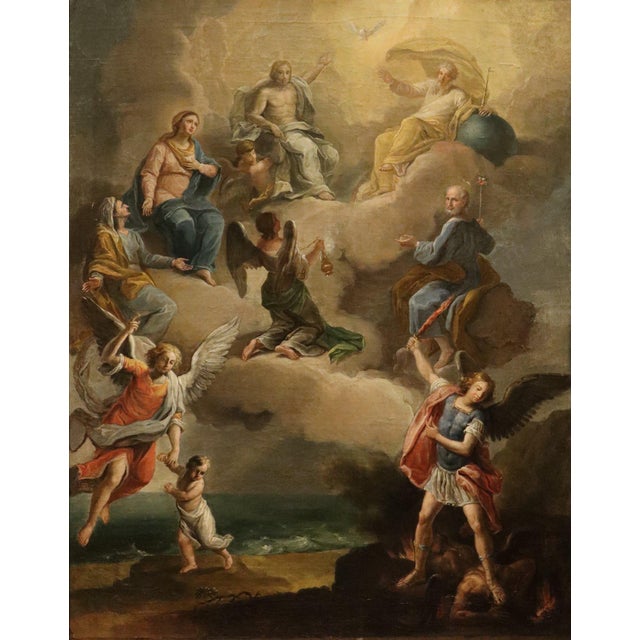
Triumph of the Trinity with the Madonna, Saint Anne, Saint Joseph, and the Archangels Michael and Raphael
Oil on canvas (87 x 69 cm - with antique frame 107 x 89 cm)
Private collection, Rome
The interesting painting on offer, depicting the "Triumph of the Trinity," is a valuable testimony to the golden age of Neapolitan painting between the late 17th and early 18th centuries, a period of extraordinary artistic vitality in which the theatrical exuberance of the Baroque began to fade into the luminous grace of the Rococo.
In particular, admiring its stylistic elements and compositional choices, we are inclined to link the canvas's authorship to the painter Paolo De Matteis (1662–1728), one of the key figures in this cultural transformation. Trained in Naples, he later became famous throughout Europe, from papal Rome to Louis XIV's Paris.
Our painting is emblematic of his pictorial language, which we might define as a refined synthesis between the luminous and lively Neapolitan Baroque of Luca Giordano and the rigorous and elegant classicism of the Roman Carlo Maratta.
from Giordano, his first teacher in Naples, De Matteis inherited the rapid brushstrokes, the warm color scheme, and the ability to orchestrate vast choral scenes suspended among the clouds (Image 1 - see The Holy Trinity, Luca Giordano, ca. 1685–1690, New York, The Metropolitan Museum of Art).
This is combined with the tendency toward balance he assimilated in the papal city alongside Maratta, which pushed him to moderate the dramatic contrasts of the seventeenth century in favor of more airy compositions, pastel shades, and figures with an almost Arcadian sweetness.
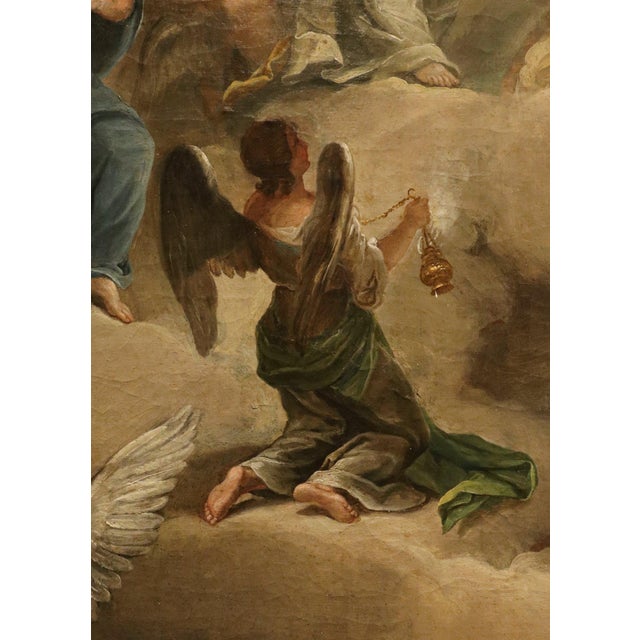
Let us now focus our attention on the composition's interesting orchestration, played out across multiple overlapping registers, populated by celestial figures immersed in a thick blanket of luminous clouds that slope down toward an earthly and infernal landscape in the lower section.
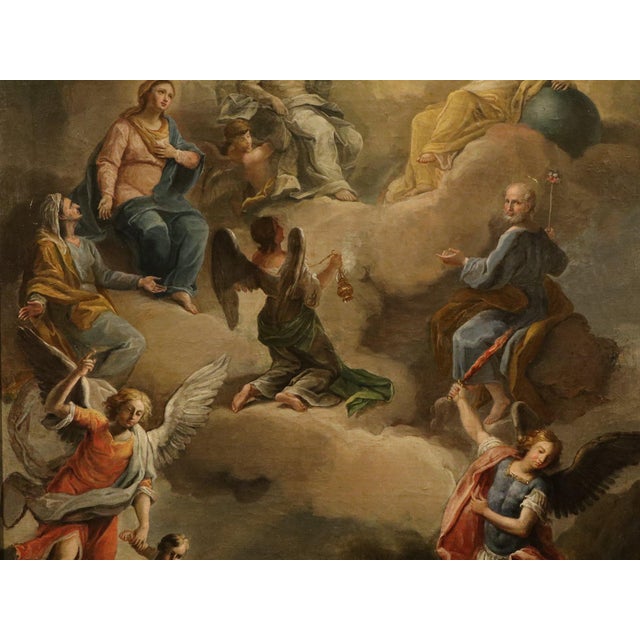
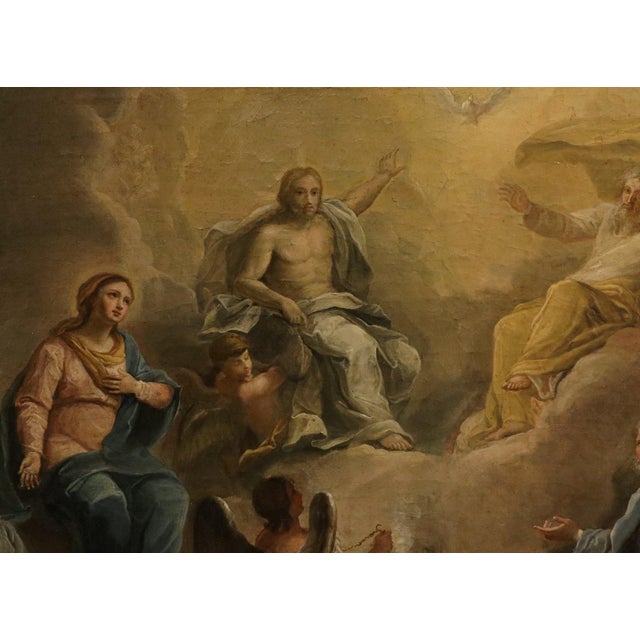
The Holy Trinity dominates the sky, with the dove of the Holy Spirit, the source of divine light, Jesus Christ, and God the Father, solemnly leaning on the blue globe.
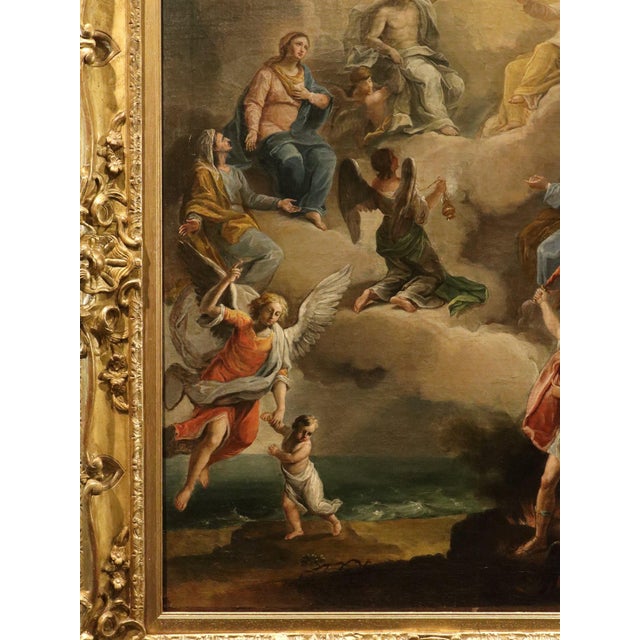
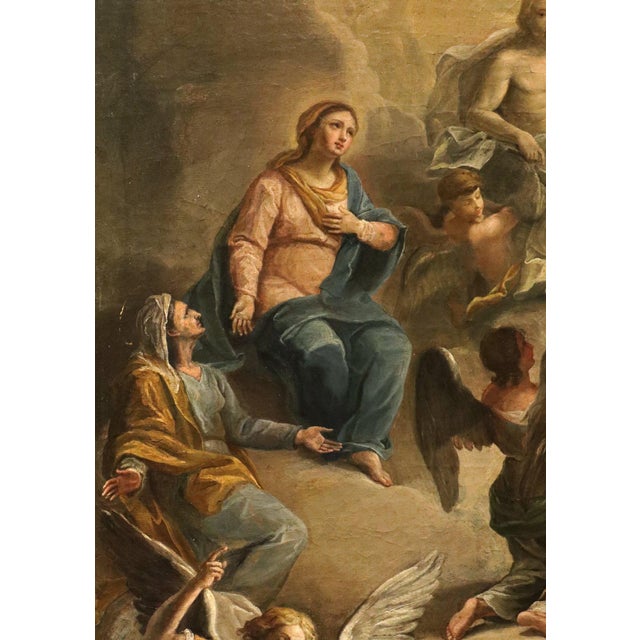
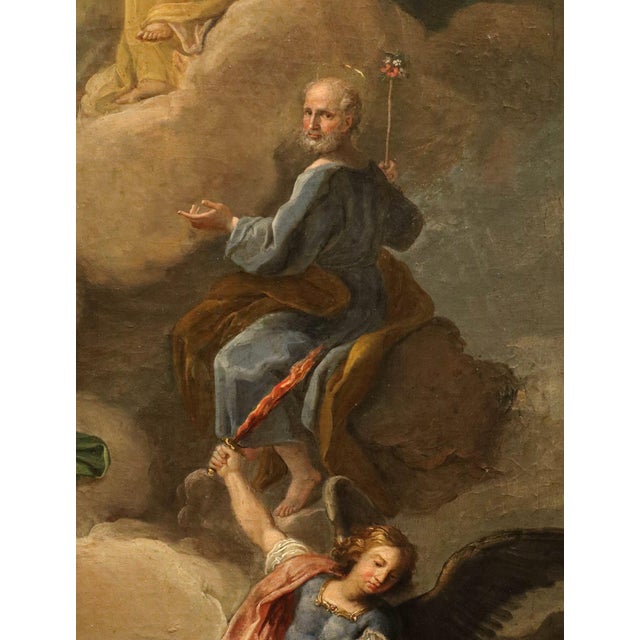
Before them, we can recognize the Virgin accompanied by Saint Anne, captured in an attitude of devout intercession, while on the opposite side we can recognize Saint Joseph with his flowering staff.
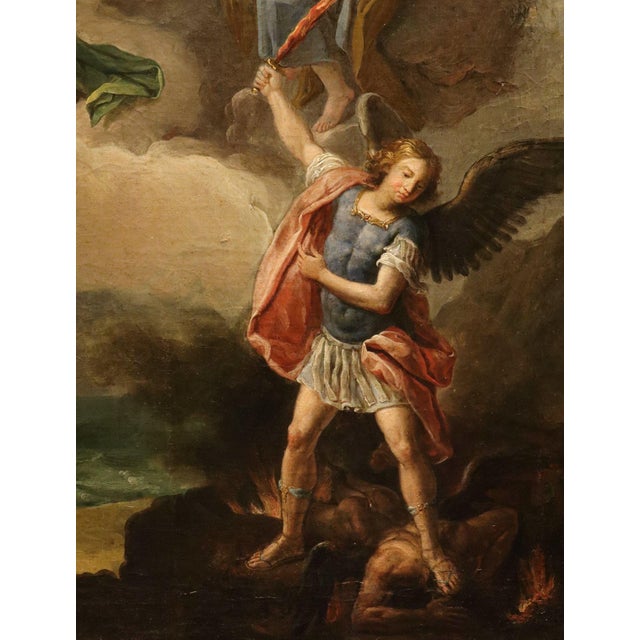
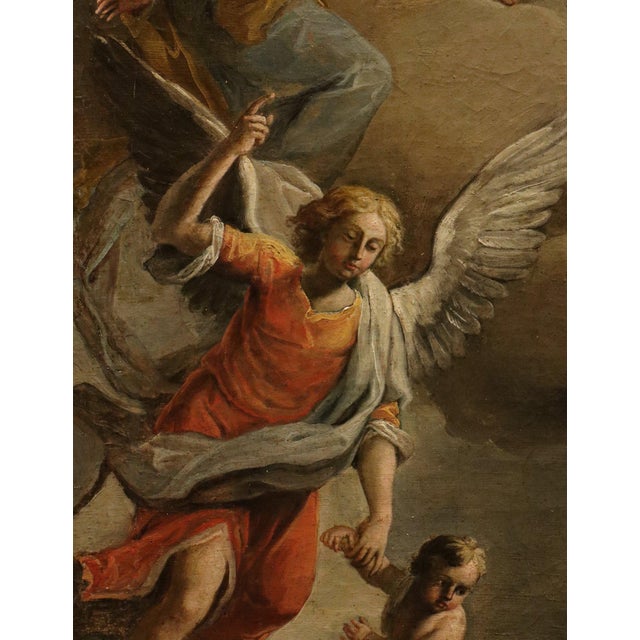
In the lower register, two majestic archangels stand tall, figures alluding to the eternal struggle between Good and Evil, intended to exalt the triumph of faith and divine protection. Specifically, Saint Michael the Archangel, the warrior angel with his armor and outstretched wings, is seen subduing a demon in the flames of hell. On the opposite side, Saint Raphael the Archangel, in the guise of a guardian angel, protects a child, holding him by the hand and steering him away from the flames of darkness.
The theme of the Trinity, explored by De Matteis on numerous occasions, was a cornerstone of eighteenth-century Neapolitan devotional painting, giving us grandiose, theatrical compositions bathed in a mystical and enveloping luminosity. Among these are the frescoes of the Madonna in Glory with the Trinity in Guardia Sanframondi (Image 2) and the detail of the Trinity in Glory in San Cataldo (Image 3).
Paolo De Matteis, assisted by his workshop, stood out for his vast production of large-scale decorative fresco cycles in churches and noble palaces. Our canvas could likely reproduce one of these, possibly a model or preparatory sketch for a monumental composition.
Image 1 - Luca Giordano, The Trinity, ca. 1685–1690, 26 × 38 cm. New York, Metropolitan Museum of Art
Image 2 - Madonna in Glory with Trinity, Paolo De Matteis (attributed). Guardia Sanframondi
Image 3 (Detail) - Paolo De Matteis, Glory of San Cataldo, 1714–1715, fresco. Taranto, Chapel of San Cataldo
ADDITIONAL INFORMATION:
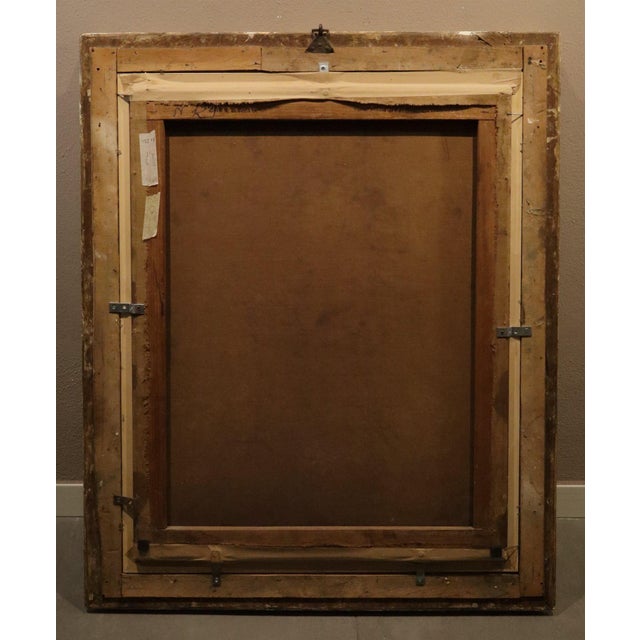
The painting is sold complete with a beautiful gilded frame and comes with a certificate of authenticity and an iconographic This piece is attributed to the mentioned designer/maker. It has no attribution mark and no
official proof of authenticity,
however it is well documented in design history. I take full responsibility for any authenticity
issues arising from misattribution
See less
- Dimensions
- 35.04ʺW × 4.72ʺD × 42.13ʺH
- Art Subjects
- Figure
- Period
- 18th Century
- Country of Origin
- Italy
- Item Type
- Vintage, Antique or Pre-owned
- Condition
- Good Condition, Unknown, Some Imperfections
- Color
- Condition Notes
- Patina Consistent with Age and Use,Reupholstered,Partially Restored Patina Consistent with Age and Use,Reupholstered,Partially Restored less
Returns & Cancellations
Return Policy - All sales are final 48 hours after delivery, unless otherwise specified in the description of the product.
Cancellation Policy - Prior to shipping or local pickup, buyers may cancel an order for up to 48 hours, unless otherwise specified.
Related Collections
- Photorealism Canvas Paintings
- Ed Ruscha Paintings
- Photorealism Paintings in New York
- Richard Serra Paintings
- Herman Miller Paintings
- James McCray Paintings
- Louise Nevelson Paintings
- Karen Offutt Paintings
- Johannes Andersen Paintings
- Pedro Friedeberg Paintings
- Soicher Marin Paintings
- Joseph Stella Paintings
- Laddie John Dill Paintings
- Nicola Simbari Paintings
- BDDW Paintings
- Red Abstract Paintings
- Cassina Paintings
- Claude Lalanne Paintings
- George Condo Paintings
- Jeff Koons Paintings
- Margaret Kennedy Paintings
- Jaanika Peerna Paintings
- Milton Avery Paintings
- Jean-Pierre Vasarely Paintings
- Jeff Slemmons Paintings