

Cheshire Antiques Consultant LTD
Chester, Cheshire West and Chester
Since 2021100+ sales
3x Super Seller

Starting at 40% Off
Sale Ends December 1st, 2026 - Shop Now
Details
Description
1897 Alfred Charles Havell Victorian Equestrian Oil Painting Victor Wild with Mornington Cannon
An exceptional original late-Victorian British sporting oil …
Read more
1897 Alfred Charles Havell Victorian Equestrian Oil Painting Victor Wild with Mornington Cannon
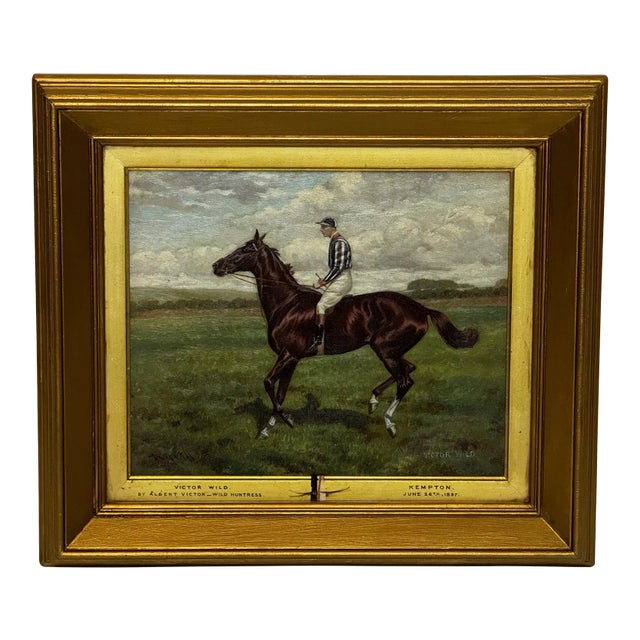
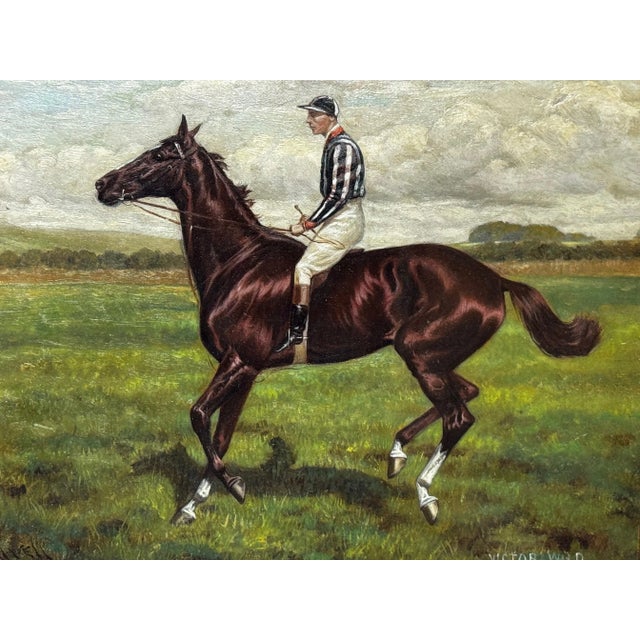
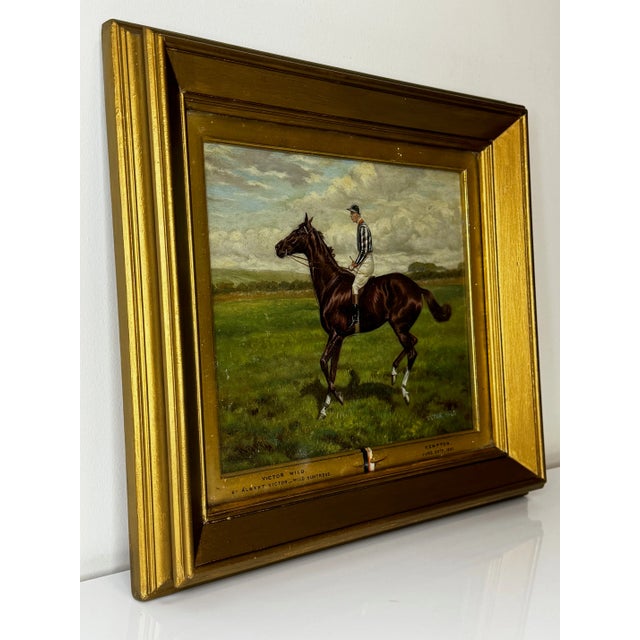
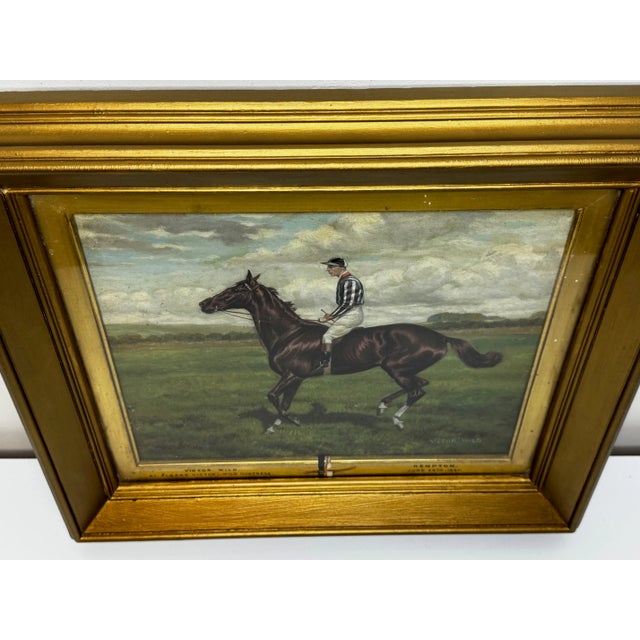
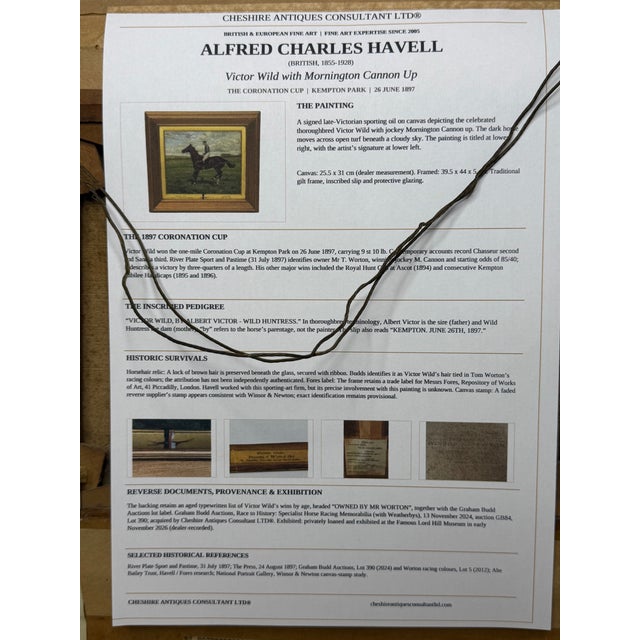
An exceptional original late-Victorian British sporting oil painting by Alfred Charles Havell (1855–1928), depicting the celebrated thoroughbred Victor Wild with champion jockey Herbert Mornington Cannon up, commemorating the Coronation Cup at Kempton Park, England, on June 26, 1897.
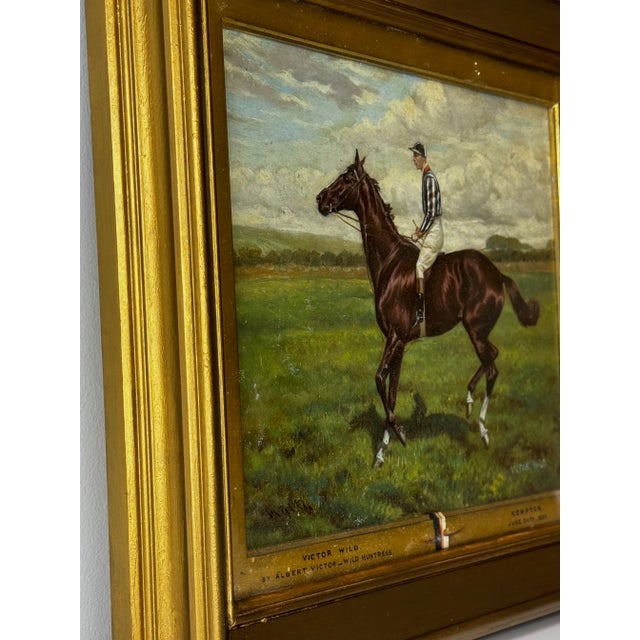
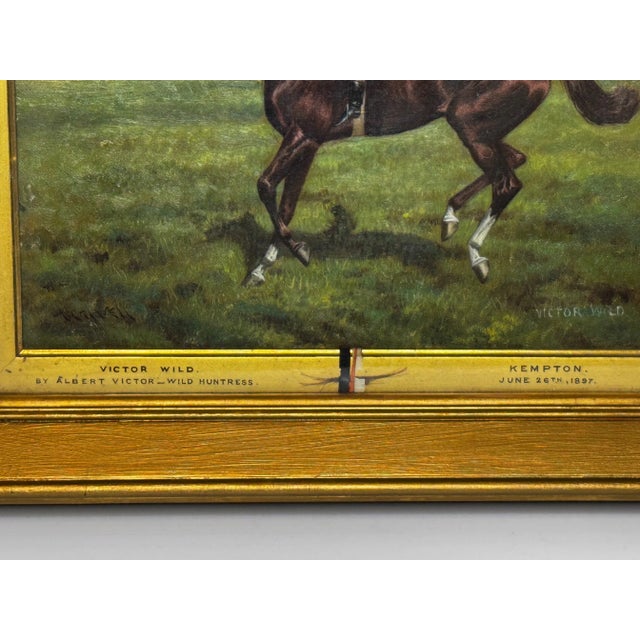
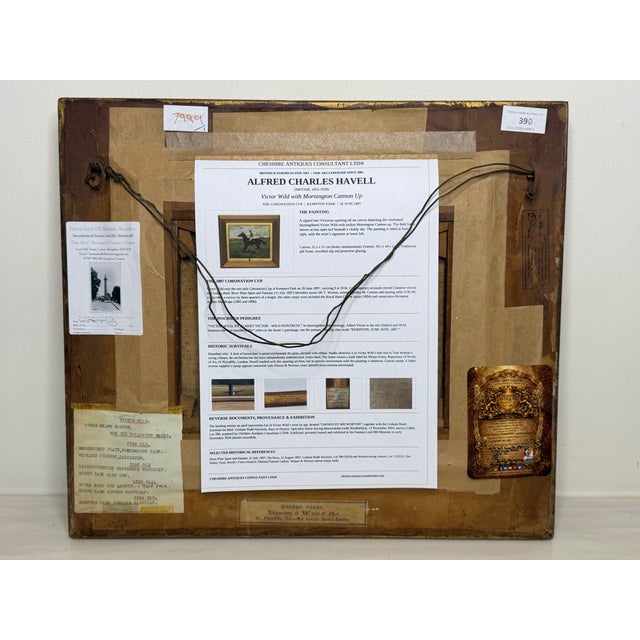
Presented in a traditional gilt frame with protective glazing, the painting retains an extraordinary collection of historical features, including a preserved lock of horsehair attributed to Victor Wild, original pedigree inscriptions, a historic Messrs Fores of Piccadilly trade label, a faded canvas supplier's stamp and an aged record of the horse's racing achievements.
Highlights
- Original signed late-Victorian British oil on canvas, circa 1897.
- Alfred Charles Havell (1855–1928), distinguished British sporting artist.
- Victor Wild with six-time Champion Jockey Herbert Mornington Cannon up.
- Commemorates the Coronation Cup at Kempton Park on June 26, 1897.
- Contemporary racing reports corroborating the horse, owner, jockey and victory.
- Historic gilt slip identifying the horse's pedigree and race date.
- Preserved lock of horsehair identified by Graham Budd Auctions as belonging to Victor Wild.
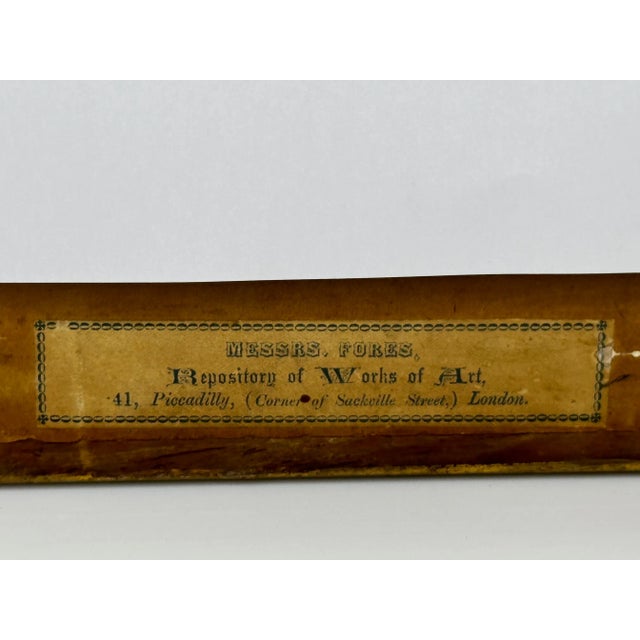
- Historic Messrs Fores trade label, 41 Piccadilly, London.
- Faded canvas supplier's stamp provisionally associated with Winsor & Newton.
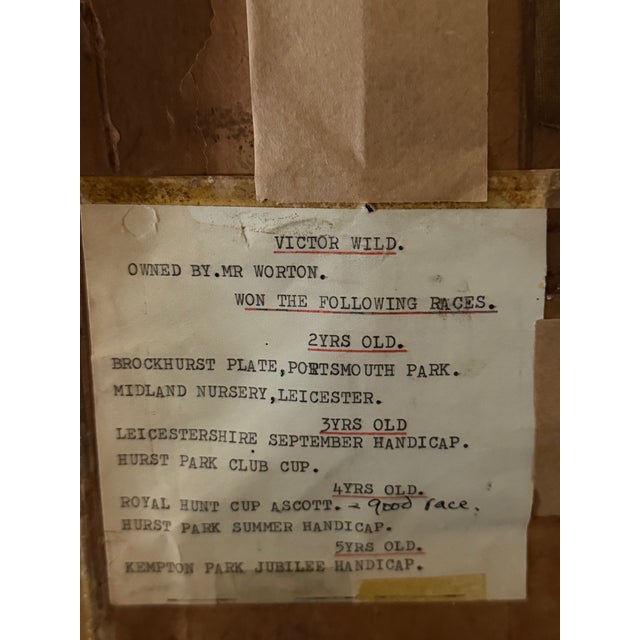
- Historic typewritten racing record retained on the reverse.
- Original Graham Budd Auctions identification label.
- Graham Budd Auctions, November 13, 2024, Auction GB84, Lot 390.
- Privately loaned and exhibited at the Famous Lord Hill Museum, November 2026.
- Traditional gilt frame with protective glazing.
Introduction
An unusually well-documented example of nineteenth-century British equestrian portraiture, combining the decorative elegance of Victorian sporting art with an extensive collection of surviving historical evidence.
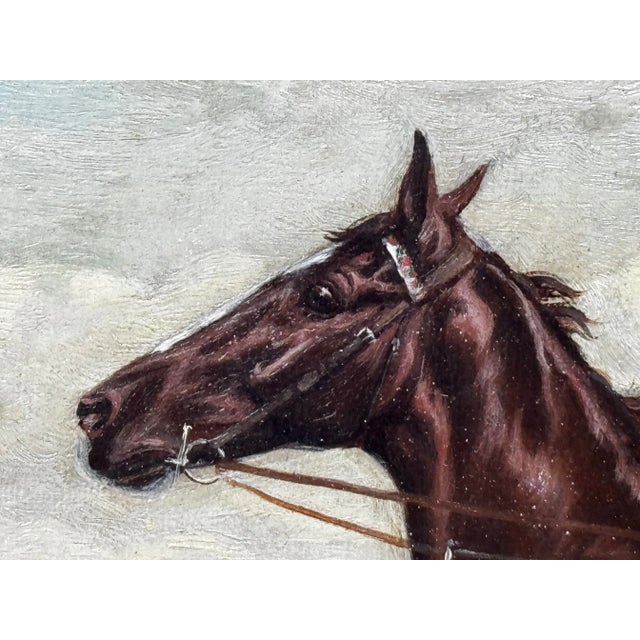
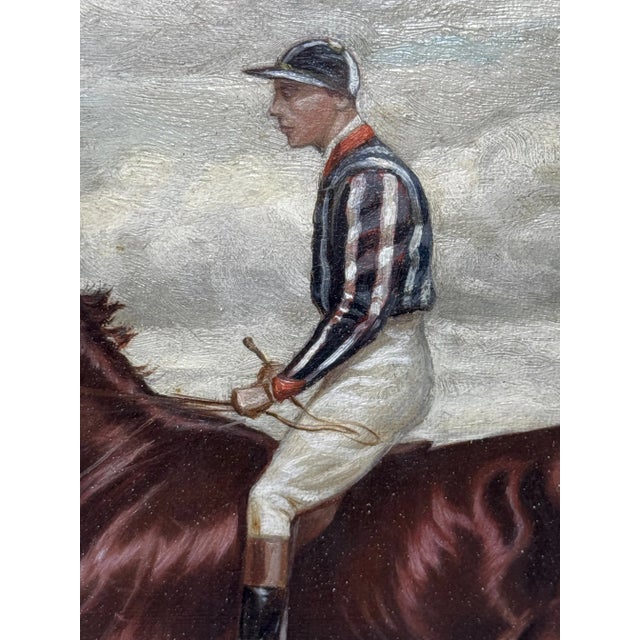
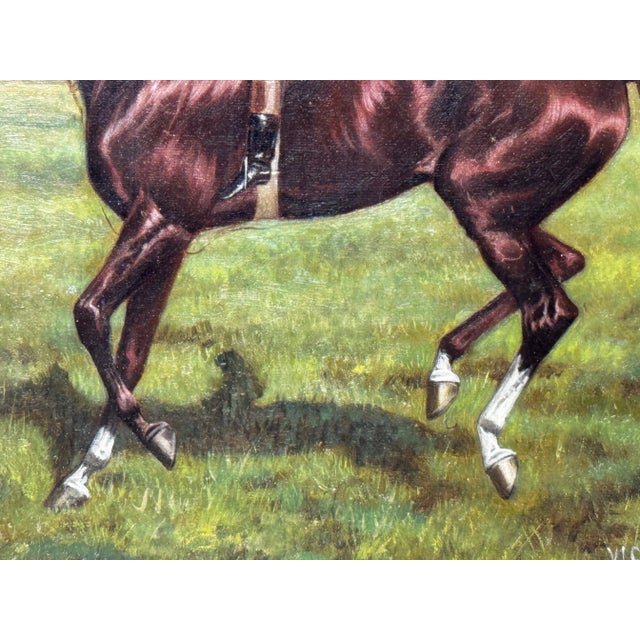
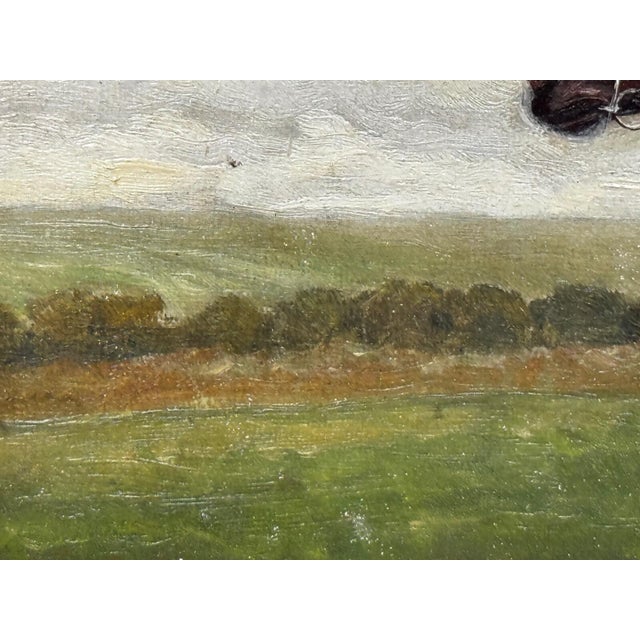
Victor Wild is depicted in a commanding left-facing profile against an open green racecourse landscape beneath a softly clouded English sky. His powerful chestnut form is carefully modelled, while Mornington Cannon is shown mounted in striped racing silks.
The warm gilt frame complements the painting's rich equine browns, atmospheric greens and subtle sky tones, making it particularly suitable for a traditional American library, equestrian estate, country-house interior, private study or collection of historic sporting art.
Unlike an unidentified decorative horse portrait, the present painting commemorates a specific and independently documented victory in British racing history.
Catalogue Details
Artist: Alfred Charles Havell (1855–1928)
Title: *Victor Wild with Mornington Cannon Up, Kempton Park, June 26, 1897*
Date: Circa 1897
Origin: England, United Kingdom
School: British
Period: Late Victorian, nineteenth century
Style: Victorian, Traditional, Equestrian, Sporting Art
Medium: Oil on canvas
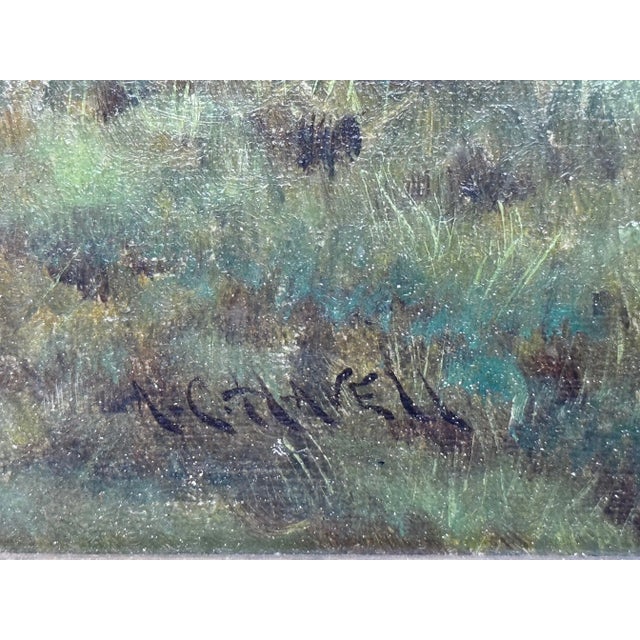
Signature: Signed lower left; horse identified within the composition
Subject: Victor Wild and Herbert Mornington Cannon
Frame: Traditional gilt frame with inscribed inner slip and protective glazing
Catalogue Note — The Coronation Cup, 1897
The painting commemorates Victor Wild's victory in the Coronation Cup at Kempton Park on Saturday, June 26, 1897.
A contemporary racing report published in *River Plate Sport and Pastime*, Buenos Aires, on July 31, 1897, records Victor Wild, owned by Mr T. Worton, winning under M. Cannon at starting odds of 85/40.
The race was contested over one mile on Kempton Park's Jubilee Course.
Victor Wild carried 9 stone 10 pounds, equivalent to 136 pounds, and defeated Chasseur, with Sandia finishing third.
The reported winning margin was three-quarters of a length.
A further contemporary account published in *The Press*, Christchurch, on August 24, 1897, describes the enthusiastic reception Victor Wild received upon returning to weigh in.
These contemporary sources independently corroborate the racing event, horse, owner and jockey identified in the painting's specialist auction description.
The Horse — Victor Wild
Victor Wild was a celebrated chestnut British thoroughbred foaled in 1890, bred by A. W. Mostyn Owen, by Albert Victor out of Wild Huntress.
Historical breeding literature describes him as standing approximately 16 hands 2½ inches high, possessing considerable length, powerful shoulders, a strong neck and distinctive white markings.
His early racing career included victories in the Brockhurst Plate at Portsmouth Park and the Midland Nursery at Leicester.
As a three-year-old, he won the Leicestershire September Handicap and Hurst Park Club Cup.
In 1894, he achieved one of his most celebrated victories by winning the Royal Hunt Cup at Ascot, reportedly starting at odds of 50/1. He also won the Hurst Park Summer Handicap.
Victor Wild subsequently became particularly associated with Kempton Park, capturing consecutive Great Jubilee Handicaps in 1895 and 1896.
In 1897, he finished third in the Great Jubilee Handicap before securing the Coronation Cup victory commemorated in the present painting.
Following his racing career, Victor Wild was advertised for stud duties at Lordship Stud Farm near Newmarket during the 1898 covering season.
His advertised fee was 40 guineas per approved mare, together with one guinea for the groom.
His reputation endured beyond his racing career. Historical accounts record a locomotive named Victor Wild in 1923 and the inauguration of the Victor Wild Stakes at Kempton Park in 1934.
The Owner — Thomas Worton
Thomas Worton, commonly known as Tom Worton, was a British publican, racehorse owner and trainer associated with Lambourn, Berkshire.
He reportedly purchased Victor Wild for 330 guineas following the horse's Brockhurst Plate victory at Portsmouth Park.
The acquisition proved exceptionally successful, with Victor Wild becoming one of the distinguished British handicap performers of the 1890s.
Worton was associated with Waltham House Stables in Upper Lambourn, subsequently known as Lethornes.
His documented racing colours comprised a black-and-gold striped jacket with red collar and cuffs, together with a black-and-gold quartered cap.
The original racing jacket, cap and leather colours bag were documented by Graham Budd Auctions on November 6, 2012, Lot 5.
These surviving garments provide valuable comparative evidence for the striped racing silks depicted in Havell's painting and the ribbon accompanying the preserved horsehair relic.
The Trainer — Joe Cannon and Newmarket
Historical stable research indicates that Victor Wild transferred to Joe Cannon's training establishment at Newmarket in January 1897.
The transfer preceded the horse's Coronation Cup victory at Kempton Park on June 26, 1897.
Joe Cannon is identified as the trainer for the victory in historical stable accounts.
The distinction between Tom Worton's Lambourn racing interests and Joe Cannon's Newmarket establishment is important.
Although Victor Wild was associated with Worton and the Lambourn racing community, the available historical account places his training with Joe Cannon at Newmarket during the 1897 Coronation Cup campaign.
The Champion Jockey — Herbert Mornington Cannon
Herbert Mornington Cannon (1873–1962), popularly known as Morny Cannon, was among the most accomplished British flat-racing jockeys of the late Victorian period.
Born into the distinguished Cannon racing family, he was the son of Thomas Cannon (1846–1917), a successful jockey and trainer.
Mornington Cannon became British Champion Jockey six times, winning the championship in 1891, 1892 and consecutively from 1894 to 1897.
During the 1897 season, he recorded 145 victories from 624 mounts.
His later achievements included partnering Flying Fox to victory in the English Triple Crown in 1899.
Cannon's importance in Victorian sporting society is reflected in contemporary portraiture.
Sir Leslie Ward, known as Spy, depicted Cannon in *Vanity Fair* on October 24, 1891. The portrait is documented by the National Portrait Gallery, London, reference NPG D44565.
A further colour lithograph dated 1894, based upon a photograph by Sherborn of Newmarket, is documented by Josef Lebovic Gallery.
The contemporary Coronation Cup result published in July 1897 identifies M. Cannon as the winning jockey aboard Victor Wild.
Dating the Painting
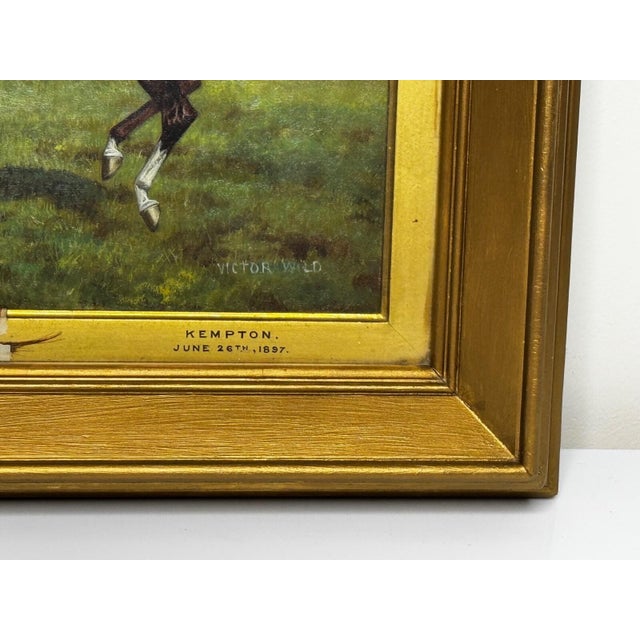
The historic gilt slip is inscribed:
“KEMPTON. JUNE 26TH, 1897.”
The painting is catalogued circa 1897, consistent with its commemorative subject and late-Victorian presentation.
The inscription records the date of the racing event rather than independently proving the precise date upon which Havell completed the painting.
Victorian British Sporting Art and Historical Context
During the nineteenth century, portraits of distinguished thoroughbreds formed an important part of British sporting culture.
Such paintings commemorated successful racehorses, prominent jockeys, owners and major racing victories.
They also served as visual historical records, preserving the appearance, pedigree and achievements of important horses.
The present work is particularly interesting because its surviving inscriptions, preserved horsehair relic and documentary evidence connect the painted subject with a specific event in 1897.
Its traditional presentation makes it an appealing example of historic British equestrian art for collectors of sporting paintings and refined interiors.
The Artist — Alfred Charles Havell (1855–1928)
Alfred Charles Havell was a distinguished British sporting painter from the celebrated Havell family of artists, engravers and printmakers.
Born in Chelsea, London, in 1855, he was the son of Edmund Havell Junior (1819–1894), a portrait painter associated with Queen Victoria, and grandson of Edmund Havell Senior (1785–1864).
His great-grandfather, Luke Havell, helped establish the family's artistic tradition in Reading, Berkshire.
The wider family included landscape painter William Havell and Robert Havell Junior, celebrated for his involvement in producing John James Audubon's monumental *Birds of America*.
Havell first exhibited at the Royal Academy in London in 1878 and developed a particular specialism in portraits of distinguished thoroughbred racehorses.
His paintings combined careful observation of equine anatomy with the commemorative traditions of British sporting portraiture.
He maintained a longstanding professional association with Messrs Fores of Piccadilly, celebrated London publishers and dealers in sporting art.
His documented subjects included *Sheen*, *Alicante*, *Sainfoin*, *Ormonde* and *Dark Ronald*.
His paintings are represented in the National Horseracing Museum, Newmarket, and documented through Art UK.
The Abe Bailey Trust collection includes his 1909 oil painting *Dark Ronald* and records his professional association with Messrs Fores.
Havell's artistic importance lies particularly in his contribution to the visual documentation of British thoroughbred racing during the late Victorian and Edwardian periods.
The present painting is especially relevant to his career because it retains a historic Messrs Fores trade label on the reverse.
The Preserved Lock of Victor Wild's Hair
One of the most remarkable features of the painting is the small lock of brown horsehair preserved beneath the protective front glazing, secured by a narrow ribbon at the lower centre of the gilt inner slip.
The original Graham Budd Auctions catalogue specifically identifies the hair as belonging to Victor Wild and describes the accompanying ribbon as representing the racing colours of owner Thomas Worton.
Within Victorian equestrian culture, such relics could serve as personal or commemorative keepsakes, providing a tangible reminder of a distinguished horse and its achievements.
The survival of the hair alongside the named and dated portrait is particularly significant because the painting commemorates Victor Wild's victory in the Coronation Cup on June 26, 1897.
Worton's original racing colours were separately documented by Graham Budd Auctions in November 2012, Lot 5.
The individual strands of hair have not been independently authenticated; their identification is retained as recorded in the specialist auction catalogue.
The hair and ribbon remain preserved in situ as part of the artwork's historical presentation.
The Historic Winsor & Newton Canvas Stamp
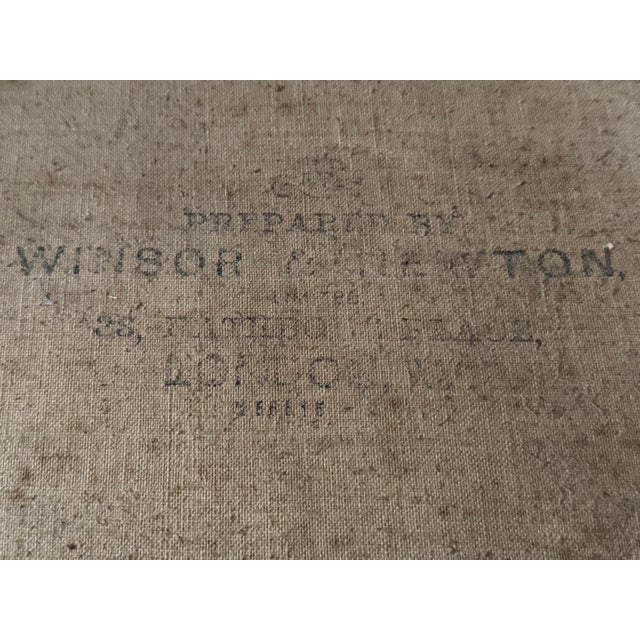
The reverse of the canvas bears a faded black manufacturer's or artists' colourman's stamp, provisionally identified as Winsor & Newton.
Established in London in 1832, Winsor & Newton became an important supplier of prepared canvases, artists' paints and related materials throughout the Victorian period.
The National Portrait Gallery's research publication *British Canvas, Stretcher and Panel Suppliers' Marks*, Part 10, compiled by Jacob Simon, documents numerous historical Winsor & Newton canvas stamps.
Several comparable stamp types were used during the late nineteenth century, including the 1880s and 1890s.
If the present stamp is confirmed as a documented Winsor & Newton type, it could provide additional material evidence supporting the painting's proposed period.
However, the exact wording, manufacturer and stamp classification remain unverified.
A canvas supplier's stamp identifies the commercial origin of the canvas rather than necessarily establishing the artist or precise execution date.
The surviving mark is therefore an important technical feature requiring preservation and further comparative research.
The Historic Messrs Fores Trade Label
The reverse of the gilt frame retains a historic printed trade label reading:
“MESSRS. FORES,
Repository of Works of Art,
41, Piccadilly,
(Corner of Sackville Street,)
London.”
Established in 1783 by Samuel William Fores, the business became one of London's leading publishers and dealers in sporting prints and pictures.
Its activities included the publication and sale of equestrian imagery and the manufacture of picture frames.
The label is particularly significant because Alfred Charles Havell is independently documented as having worked with Messrs Fores during his career.
Original paintings by Havell, including portraits of *Sheen* and *Alicante*, were associated with sporting prints published by the firm in 1891.
A separately documented painting of *Ormonde* by Havell was acquired directly from Fores in 1918, demonstrating the firm's commercial handling of original works by the artist.
The surviving label on *Victor Wild* therefore provides a significant historical association between the painting or its frame and a business closely connected to Havell's professional career.
The precise date and nature of Fores' involvement remain unestablished. The label alone does not prove an original commission, publication or sale.
The Verso Inscription and Documentary Evidence
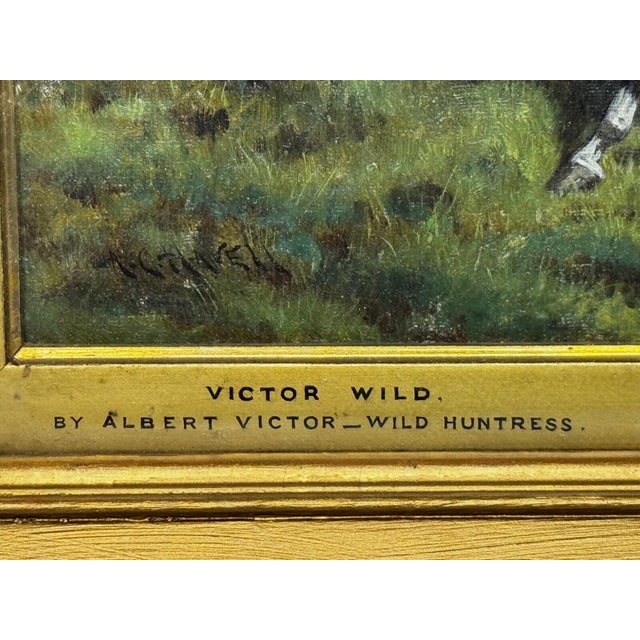
The gilt inner slip bears the inscription:
“VICTOR WILD, BY ALBERT VICTOR — WILD HUNTRESS.”
This records Victor Wild's pedigree: Albert Victor was his sire (father), while Wild Huntress was his dam (mother).
A second inscription reads:
“KEMPTON. JUNE 26TH, 1897.”
The reverse retains an aged typewritten racing record headed:
“VICTOR WILD.
OWNED BY MR WORTON.
WON THE FOLLOWING RACES.”
The document lists victories achieved by Victor Wild as a two-, three-, four- and five-year-old.
These include the Brockhurst Plate at Portsmouth Park, Midland Nursery at Leicester, Leicestershire September Handicap, Hurst Park Club Cup, Royal Hunt Cup at Ascot, Hurst Park Summer Handicap and Kempton Park Jubilee Handicap.
Several of these achievements are independently corroborated by nineteenth-century racing literature, including the *Horse-Breeder's Handbook*.
The document's date, original author and purpose remain unidentified.
The original Graham Budd Auctions identification label associated with the painting's November 2024 sale also remains attached to the reverse.
Provenance
Private collection, United Kingdom.
Historic Messrs Fores trade label retained on the reverse of the frame; the precise nature of the firm's involvement remains unestablished.
Graham Budd Auctions, *Race to History: Specialist Horse Racing Memorabilia Auction*, in partnership with Weatherbys, November 13, 2024, Auction GB84, Lot 390.
Acquired by Cheshire Antiques Consultant LTD®.
Exhibition History
The Famous Lord Hill Museum, United Kingdom; privately loaned and exhibited in early November 2026.
Dimensions**
Canvas:
Width: 12.2 inches (31 cm)
Height: 10 inches (25.5 cm)
Framed:
Width: 17.3 inches (44 cm)
Height: 15.6 inches (39.5 cm)
Depth: 2 inches (5 cm)
The original Graham Budd Auctions catalogue recorded canvas dimensions of 30 × 24 cm.
Certificate of Sale & Dealer Attribution
The artwork will be supplied with a Certificate of Sale & Dealer Attribution issued by Cheshire Antiques Consultant LTD®, recording the artwork’s catalogue details, attribution, provenance as stated, exhibition history and details of the sale. This document accompanies the work as part of its ongoing ownership and provenance record.
Cheshire Antiques Consultant LTD®
Specialising in carefully curated British and European fine art, antiques and historic works of art.
Every artwork is professionally researched and catalogued using comparative scholarship, published reference material and more than two decades of experience within the international fine art market. We are committed to offering collectors works of artistic and historical merit accompanied by transparent provenance research, detailed catalogue descriptions and professional, client-focused service.
Additional photographs and further information are available upon request.
See less
- Dimensions
- 17.32ʺW × 1.96ʺD × 15.55ʺH
- Frame Type
- Framed
- Period
- Late 19th Century
- Country of Origin
- United Kingdom
- Item Type
- Vintage, Antique or Pre-owned
- Materials
- Canvas
- Glass
- Oil Paint
- Wood
- Condition
- Original Condition Unaltered, Needs Restoration
- Color
- Chestnut
- Condition Notes
- Condition Repor The painting is presented in attractive antique condition, displaying age-related craquelure, surface discolouration and spotting. The gilt frame … moreCondition Repor The painting is presented in attractive antique condition, displaying age-related craquelure, surface discolouration and spotting. The gilt frame exhibits wear, areas of later overpainting and minor losses. The protective glazing displays light marks and scratches consistent with age and handling. The historic inscriptions, trade labels, racing record and preserved horsehair remain retained. Please examine the detailed photographs carefully, as these form an integral part of the condition description. less
Cheshire Antiques Consultant LTD
Chester, Cheshire West and Chester
Since 2021100+ sales
3x Super Seller
Starting at 40% Off
Sale Ends December 1st, 2026 - Shop Now
Questions about the item?
Returns & Cancellations
Return Policy - All sales are final 48 hours after delivery, unless otherwise specified in the description of the product.
Cancellation Policy - Prior to shipping or local pickup, buyers may cancel an order for up to 48 hours, unless otherwise specified.
Related Collections
- Photorealism Canvas Paintings
- Ed Ruscha Paintings
- Richard Serra Paintings
- Photorealism Paintings in New York
- Herman Miller Paintings
- James McCray Paintings
- Louise Nevelson Paintings
- Karen Offutt Paintings
- Johannes Andersen Paintings
- Pedro Friedeberg Paintings
- Soicher Marin Paintings
- Laddie John Dill Paintings
- Nicola Simbari Paintings
- Joseph Stella Paintings
- Red Abstract Paintings
- BDDW Paintings
- Eames Paintings
- Stellar Union Paintings
- Stellar Works Paintings
- Cassina Paintings
- Claude Lalanne Paintings
- George Condo Paintings
- Jeff Koons Paintings
- Margaret Kennedy Paintings
- Jaanika Peerna Paintings