

Details
Description
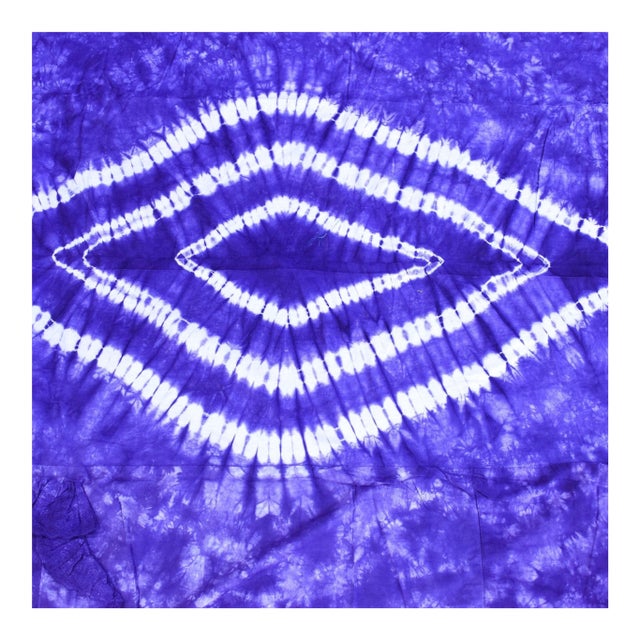
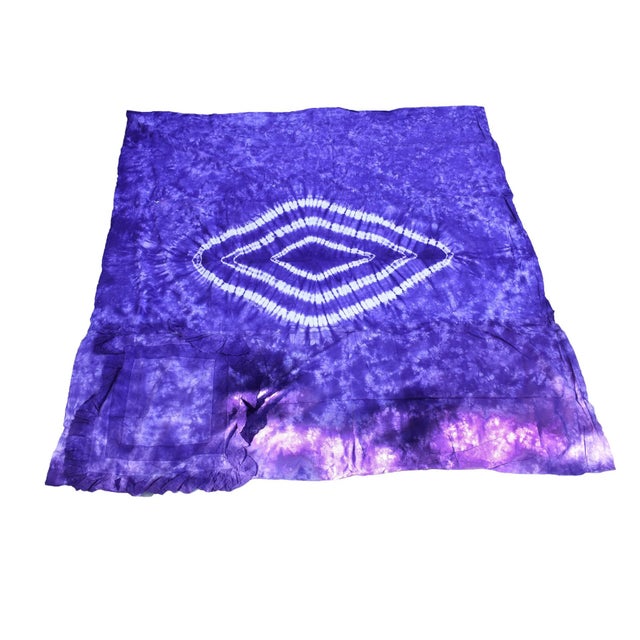
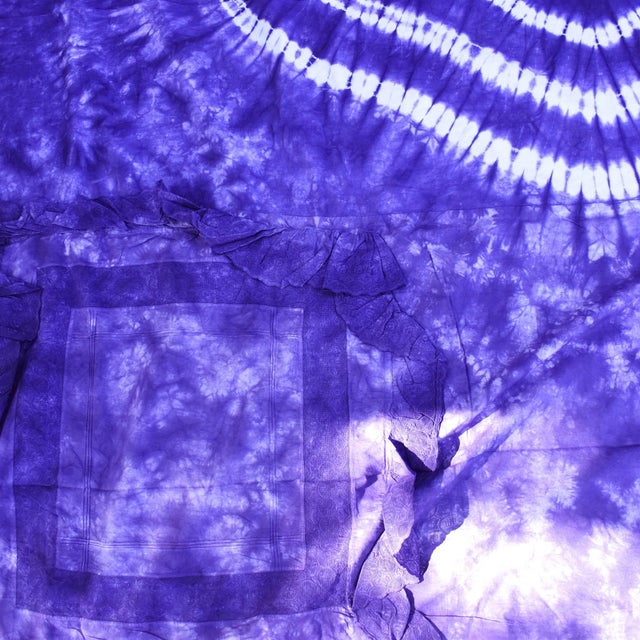
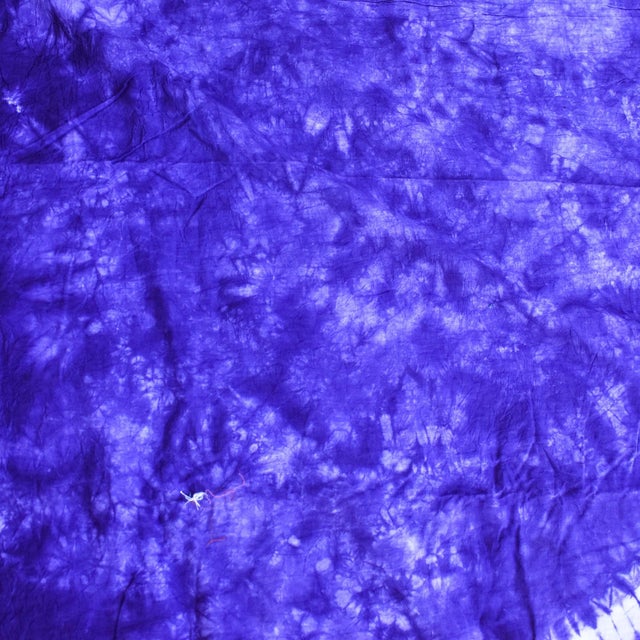
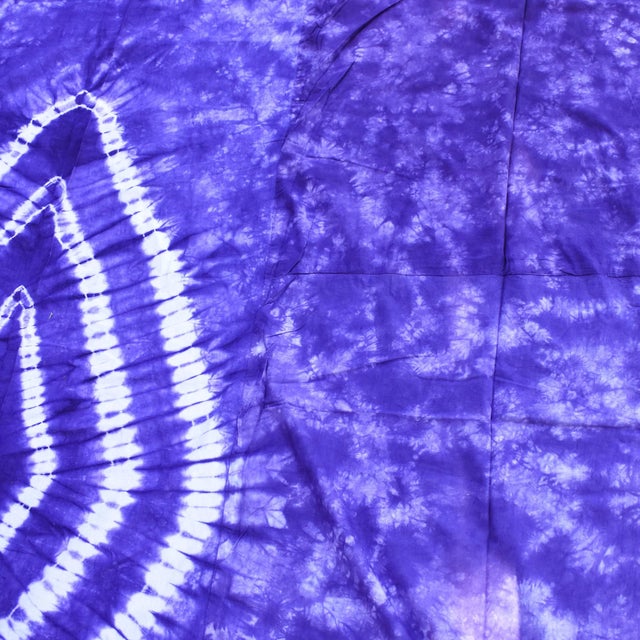
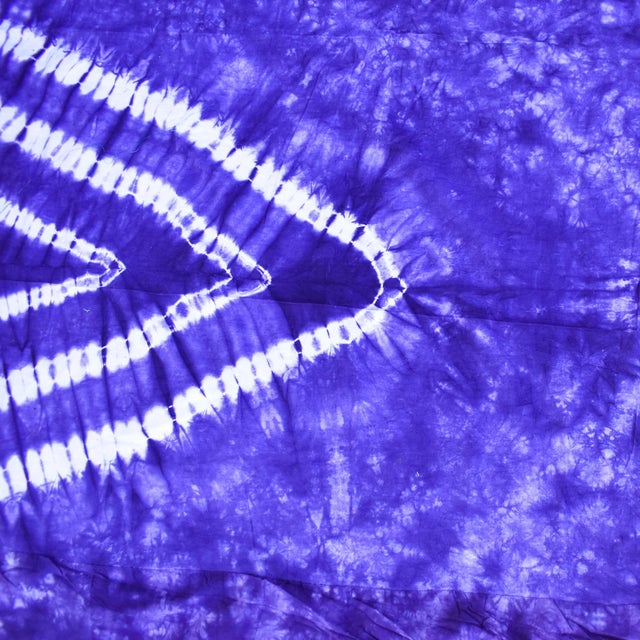
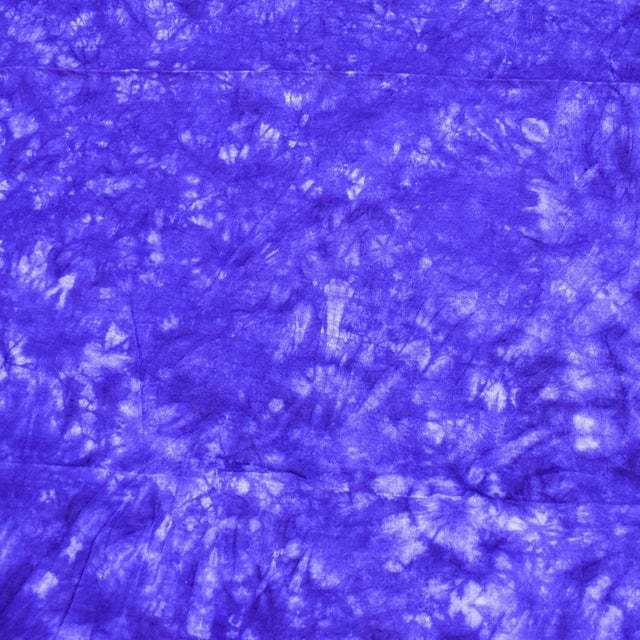
Wonderfully soft tie-dyed material!
Starch resist is a traditional dyeing technique used in Yoruba tie-dye fabric making. It involves applying …
Read more
Wonderfully soft tie-dyed material!
Starch resist is a traditional dyeing technique used in Yoruba tie-dye fabric making. It involves applying a starch paste onto the fabric in specific patterns to create areas that will resist the dye. The paste creates a barrier that prevents the dye from penetrating the fabric in the areas where it is applied. The result is a beautiful and intricate pattern that is unique to each piece of fabric.
The Yoruba people, who live in Nigeria and other parts of West Africa, have been using this technique for centuries to create colorful and vibrant fabrics. The process begins with preparing the starch paste, which is made from cassava flour and water. The paste is then applied to the fabric using a wooden stencil or by hand using a small brush or sponge.
Once the paste has been applied, the fabric is left to dry for several hours or overnight. Once the fabric is completely dry, it is immersed in a dye bath. The dye is absorbed by the areas of the fabric that are not covered by the starch paste, creating a beautiful and unique pattern.
After dyeing, the fabric is washed to remove any excess dye and the starch paste. The end result is a beautiful and colorful piece of fabric with intricate patterns that are unique to each piece. This fabric is often used to make traditional Yoruba clothing such as the Buba and Iro, as well as other decorative items.
The starch resist technique is an important part of Yoruba culture and tradition. It is a skill that is passed down from generation to generation and is still used today to create beautiful and unique fabrics. The process requires patience, skill, and attention to detail, but the end result is a work of art that is both functional and beautiful.
We do not recommend laundering textiles and do not accept returns of textiles that have been laundered in any manner. Even dry cleaning is too much for some of these antique textiles. For some of them, a very gentle HAND washing (NEVER MACHINE, on any setting) in cool water with a very gentle detergent works, but even then, dyes may not be colorfast, and fabric may be less strong than it appears.
Height (In) 82.0
Width (In) 81.5
147082
See less
- Dimensions
- 81.5ʺW × 0.02ʺL × 82ʺH
- Styles
- African
- Pattern
- Other
- Period
- Early 20th Century
- Country of Origin
- Nigeria
- Item Type
- Vintage, Antique or Pre-owned
- Materials
- Cotton
- Condition
- Good Condition, Original Condition Unaltered, Some Imperfections
- Color
- Purple
- Condition Notes
- Good. Most of our pieces have spent decades on at least two continents, and have been treasured by several owners. Good. Most of our pieces have spent decades on at least two continents, and have been treasured by several owners. less
Questions about the item?
Returns & Cancellations
Return Policy - All sales are final 48 hours after delivery, unless otherwise specified in the description of the product.
Cancellation Policy - Prior to shipping or local pickup, buyers may cancel an order for up to 48 hours, unless otherwise specified.
Related Collections
- Borastapeter Fabrics
- Twill Fabrics
- Synthetic Fabrics
- Op Art Fabrics
- Fabrics in Kansas City
- Medieval Fabrics
- Schumacher Fabrics
- French Country Fabrics
- Upholstery Fabrics
- Mid-Century Modern Fabrics
- Brunschwig and Fils Fabrics
- Italian Fabrics
- Scalamandre Fabrics
- Ralph Lauren Fabrics
- Peter Dunham Fabrics
- Cowtan And Tout Fabrics
- Art Nouveau Fabrics
- Art Deco Fabrics
- Chinoiserie Fabrics
- Thibaut Fabrics
- Quadrille Fabrics
- Tweed Fabrics
- Kravet Fabrics
- Silk Velvet Fabrics
- Nancy Corzine Fabrics