

Details
Description
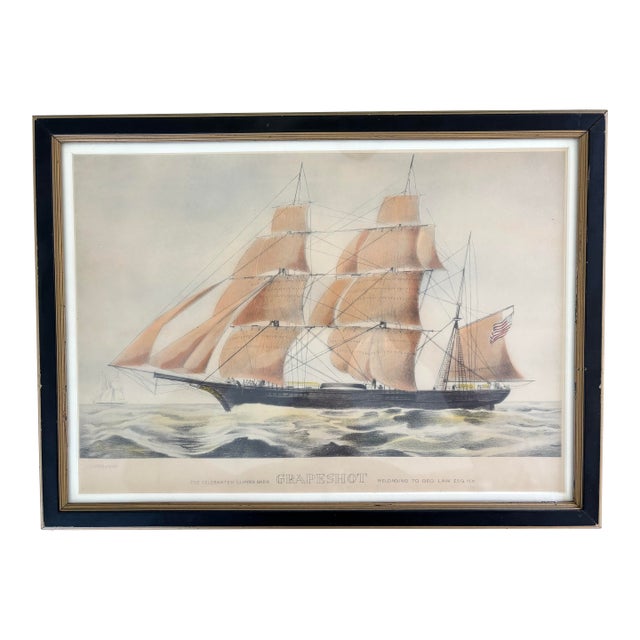
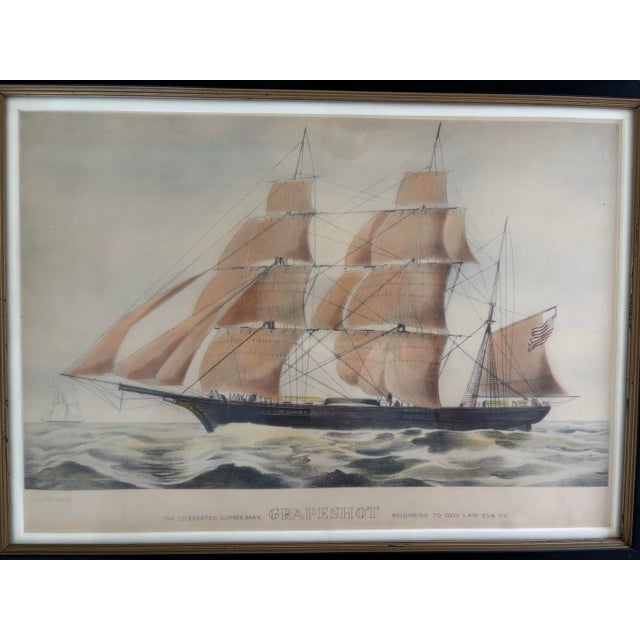
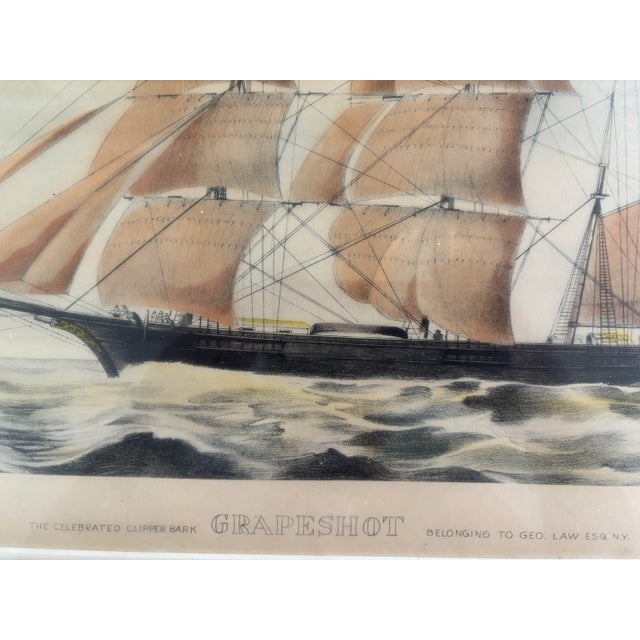
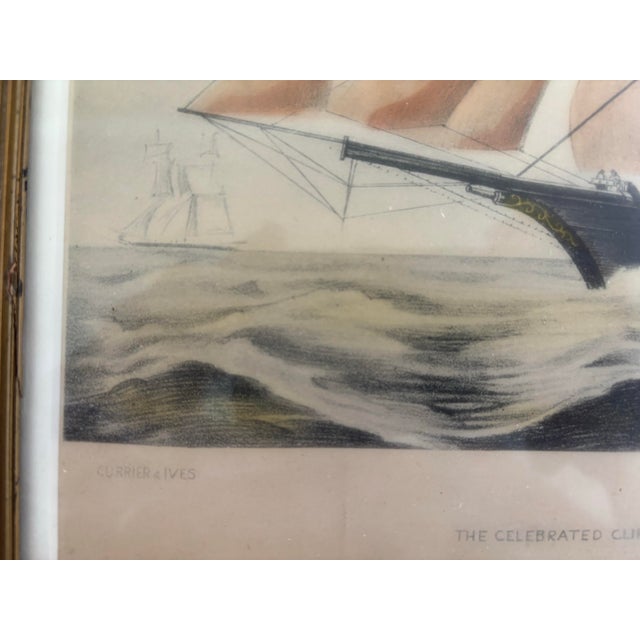
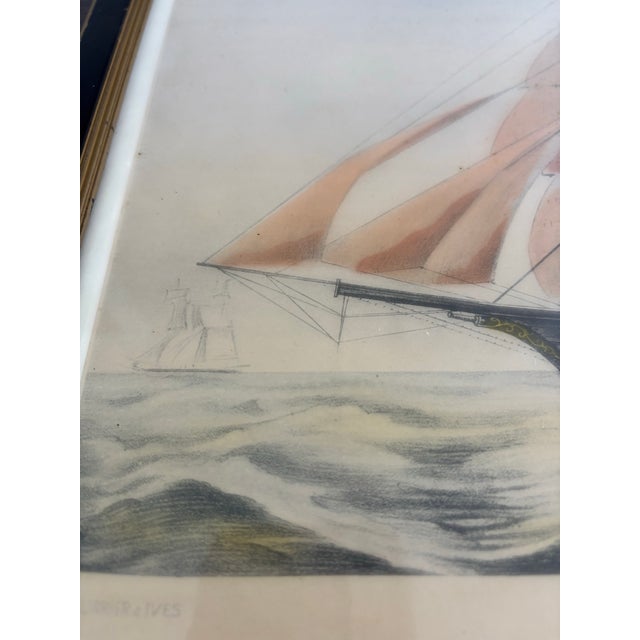
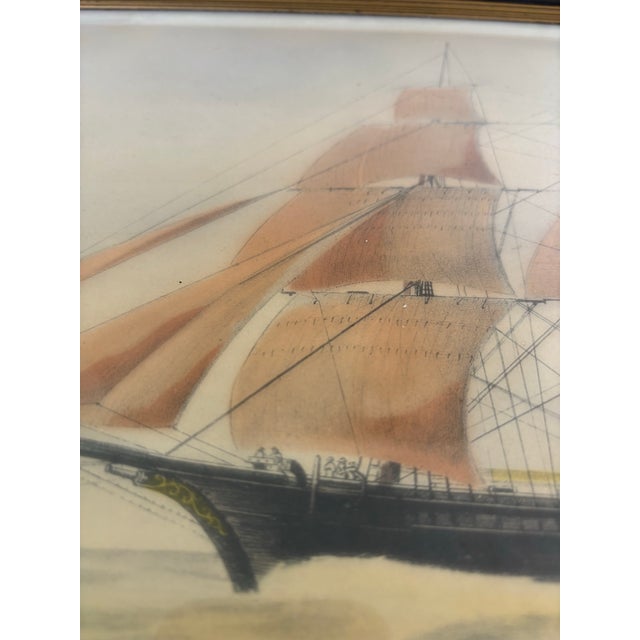
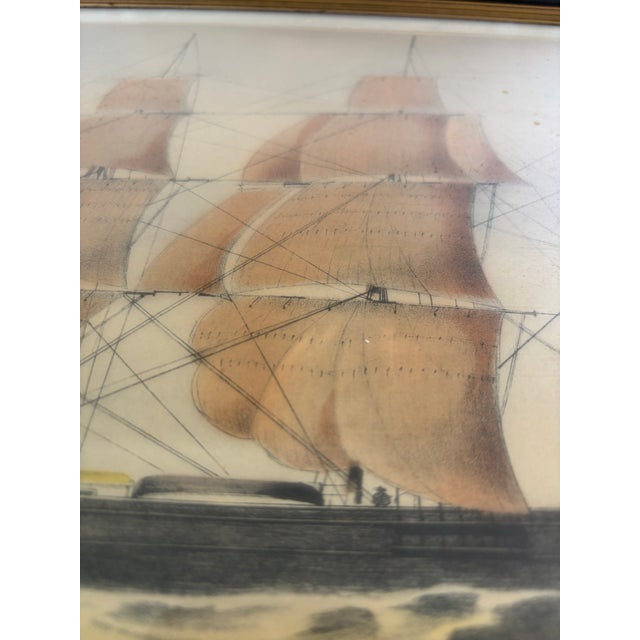
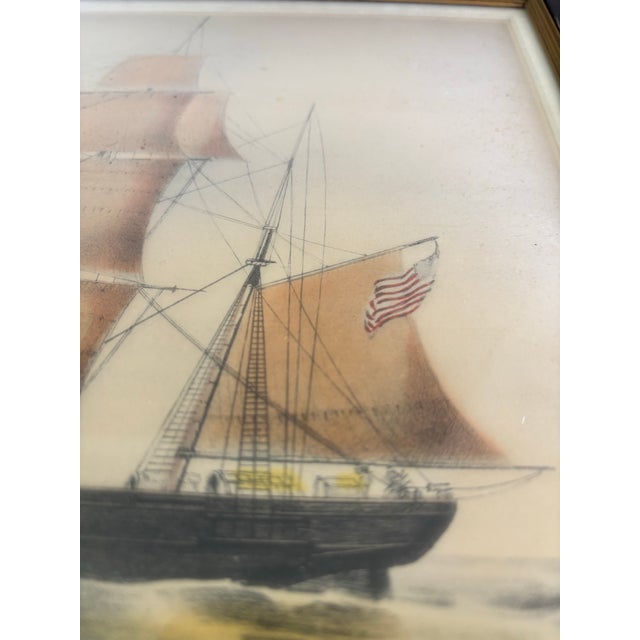
Currier & Ives “THE CELEBRATED CLIPPER BARK GRAPESHOT BELONGING TO GEO. LAW ESQ. N.Y.” hand colored 1855 lithograph in original …
Read more
Currier & Ives “THE CELEBRATED CLIPPER BARK GRAPESHOT BELONGING TO GEO. LAW ESQ. N.Y.” hand colored 1855 lithograph in original frame from the personal collection of Curtis L. Carter
Currier & Ives. The Celebrated Clipper Bark Grapeshot Belonging to Geo. Law, Esq., N.Y., ca. 1855.
Lithograph with hand applied watercolor paint
Publisher: Currier & Ives (American, active 1834-1907)
Measurements in frame are 12”H x 16”W x .75”D.
Approximate measurements of the image exclusive of margins are 10”H x 14”W (medium folio size).
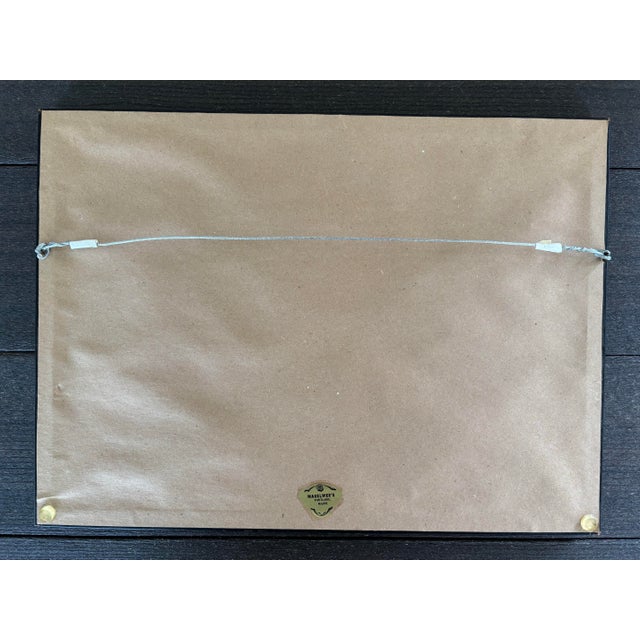
The art is beneath glass with white matte in the original black with gold trim frame. The back of the frame is wired and ready for display.
The artwork has not been removed from the frame for examination.
Currier & Ives's approach to coloring was conservative. Whereas firms such as Louis Prang's exploited the new technology of chromolithography, using multiple stones to print a variety of colors, Currier & Ives relied primarily on skilled manual labor to create fairly standardized but essentially unique prints.
Once the black ink had dried on a set of prints, they would be transported to the building's fifth floor, where a team of mostly German immigrant girls applied watercolor washes to each individual impression. Sitting at a long bench, these female colorists worked from a model print, usually colored by one of the firm's resident artists. Each worker was responsible for an individual color in each print. You can explore examples of these preserved works in the Metropolitan Museum of Art Collection.
The Vessel: The Grapeshot was a "clipper bark"—a fast, multi-masted merchant sailing vessel built for speed during the golden age of sail. It belonged to George Law, a prominent New York financier and transportation magnate.
The Grapeshot made major national headlines in 1855. Following the high-profile murder of William Poole (the infamous Tammany Hall enforcer known as "Bill the Butcher," who inspired Daniel Day-Lewis's character in Gangs of New York), the killer, Louis Baker, fled New York on a ship bound for Europe. George Law offered his cutting-edge clipper, the Grapeshot, to the authorities to chase down the fugitive. The speedy ship successfully intercepted Baker's vessel out at sea, resulting in his capture.
Geo. Law Esq. NY refers to George Law (1806-1881), a prominent 19th-century American entrepreneur, engineer, and financier from New York. Nicknamed "Live-Oak George," he made his fortune in construction, canal systems, urban transit, and steamship lines, and even ran for U.S.
President in 1856.
He secured lucrative early contracts for the Delaware and Hudson Canal, New York City aqueducts, and the High Bridge, later investing heavily in railroads and transatlantic steamship lines.
He is most commonly remembered in history today via this famous 19th-century lithograph titled "The Celebrated Clipper Bark Grapeshot Belonging to Geo. Law, Esq., N.Y.”published by Currier & Ives.
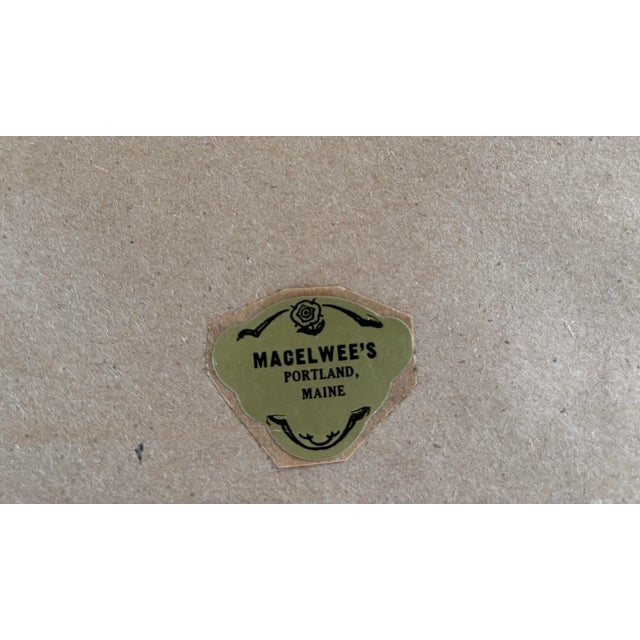
Sticker on the back of the frame reads: MACELWEE'S PORTLAND, MAINE. MacElwee's operated in the Portland area during the early to mid-20th century. It was a well-known local destination for custom framing, art restoration, and selling antique prints. The shop is frequently mentioned by antique collectors and in historical ledgers as having been the framer for classic Maine lithographs, historical maps, and vintage portraiture.
Provenance: I purchased this lithograph from the personal collection of Dr. Curtis L. Carter. Curtis L. Carter is a professor of Philosophy at Marquette University, focusing on aesthetics. He received a PhD from the University of Boston. His greatest accomplishment at Marquette was the creation of the Patrick and Beatrice Haggerty Museum of Art. Carter was the founding director from 1984-2007. He teaches several classes on the philosophy of art. Carter serves as an associate professor at Marquette University's Les Aspin Center in Washington DC. At the Aspin Center, Carter teaches a class titled "Arts in a Democratic Society". Carter currently serves as vice president of the International Association for Aesthetics.
See less
- Dimensions
- 16ʺW × 0.75ʺD × 12ʺH
- Styles
- Early American
- Frame Type
- Framed
- Art Subjects
- Seascape
- Period
- Mid 19th Century
- Country of Origin
- United States
- Item Type
- Vintage, Antique or Pre-owned
- Materials
- Lithograph
- Condition
- Good Condition, Original Condition Unaltered, Some Imperfections
- Color
- Off-white
- Condition Notes
- The condition is very good. This is an antique and may have imperfections. The condition is very good. This is an antique and may have imperfections. less
Questions about the item?
Returns & Cancellations
Return Policy - All sales are final 48 hours after delivery, unless otherwise specified in the description of the product.
Cancellation Policy - Prior to shipping or local pickup, buyers may cancel an order for up to 48 hours, unless otherwise specified.
Related Collections
- Patrick Nagel Reproduction Prints
- Reproduction Prints in Panama City, FL
- William Hogarth Reproduction Prints
- Hable Reproduction Prints
- Sam Francis Reproduction Prints
- Reproduction Prints in Boise
- Alvar Aalto Reproduction Prints
- Daylight Dream Editions Reproduction Prints
- Port 68 Reproduction Prints
- Polychrome Reproduction Prints
- Dorothy Draper Reproduction Prints
- Restoration Hardware Reproduction Prints
- Lauren Ralph Lauren Reproduction Prints
- Gold-Plate Reproduction Prints
- Utagawa Kunisada (Toyokuni Iii) Reproduction Prints
- Ralph Lauren Home Reproduction Prints
- Serena and Lily Reproduction Prints
- Bunny Williams Home Reproduction Prints
- Ralph Lauren Reproduction Prints
- Sister Parish Reproduction Prints
- Jonathan Adler Reproduction Prints
- Tuscan Reproduction Prints
- Leather Reproduction Prints
- Reproduction Prints in Mobile
- Jute Reproduction Prints